

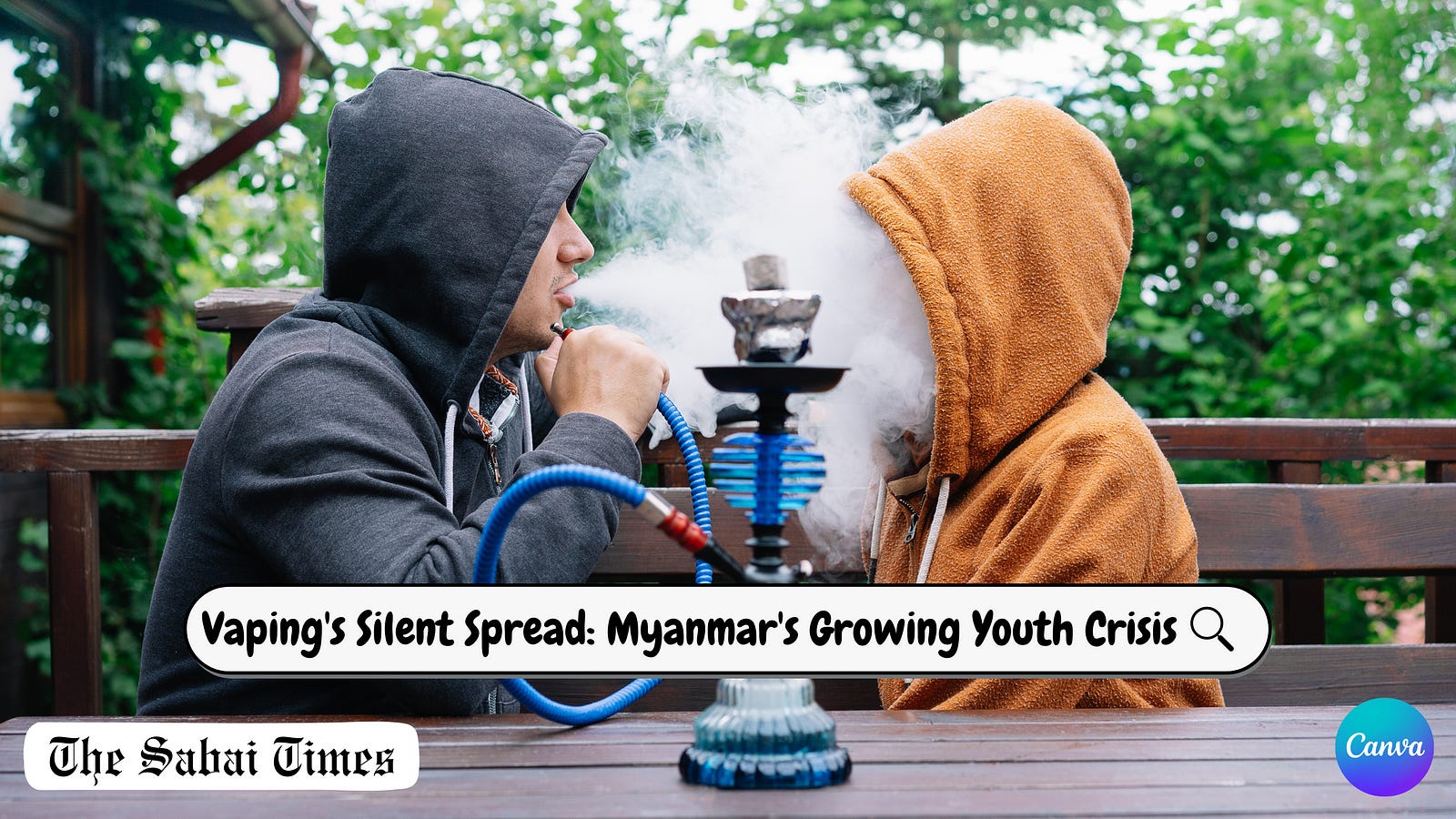
Vaping has emerged as a pressing public health issue in Myanmar, particularly among the youth. Marketed as a safer alternative to smoking, vaping, which delivers nicotine through aerosolized vapor, presents complex health risks. Despite its portrayal as a benign habit, vaping is linked to addiction and potential respiratory problems, raising urgent questions about public health and regulation.
The core challenge in Myanmar lies in the insufficient public awareness regarding vaping’s dangers. Many youths are drawn to vaping due to its perceived trendiness and supposed safety compared to smoking. However, they often overlook nicotine’s addictive properties and the health risks associated with inhaling chemical-laden vapors. Social media and peer influence amplify this misconception, leading many young people to adopt the habit without fully grasping its consequences.
Compounding the issue is the weak enforcement of existing anti-vaping regulations. Although laws prohibit the sale of vapes, particularly to minors, lax enforcement allows unregulated products to permeate the market. These products, often of dubious quality, pose additional health risks due to unmonitored ingredients and manufacturing processes.
Myanmar’s economic instability and political unrest exacerbate the problem. Vaping becomes an appealing escape for many youths in regions struggling with financial hardships and conflict. This cycle of limited education and economic opportunity drives the rise of unhealthy behaviors, reinforcing the reliance on harmful substances.
The long-term health implications of widespread vaping could strain Myanmar’s healthcare system. While the immediate effects may appear less severe than smoking, the cumulative impact of vaping might lead to chronic respiratory issues, cardiovascular diseases, and a new generation of nicotine addicts. This looming health crisis threatens to overwhelm the country’s healthcare infrastructure in the future.
To mitigate this emerging crisis, Myanmar must implement a comprehensive strategy encompassing public health education, stringent regulation, and robust enforcement. Raising awareness about the risks of vaping, particularly among the youth, through educational campaigns and media outreach is crucial. Additionally, the government must reinforce the enforcement of vaping bans and tackle the illegal sale of vape products to prevent the distribution of harmful, unregulated items.
In summary, the rise of vaping in Myanmar represents a significant challenge with far-reaching health and societal consequences. Immediate and decisive action is needed to regulate vape sales, educate the public, and curb youth usage to protect the nation’s future health.
Cylrit Elijah is a Myanmar-based youth advocate passionate about public health. He is dedicated to shedding light on the pressing health issues affecting Myanmar’s youth.
“Advocating Sustainability, Shaping Our Future”
The opinions expressed in these articles do not represent the official stance of SRIc - Shwetaungthagathu Reform Initiative Centre. The Sabai Times is committed to publishing a range of perspectives that may not align with editorial policy.
Help Sustain The Sabai Times - Myanmar’s Voice for Sustainable Development Support The Sabai Times