

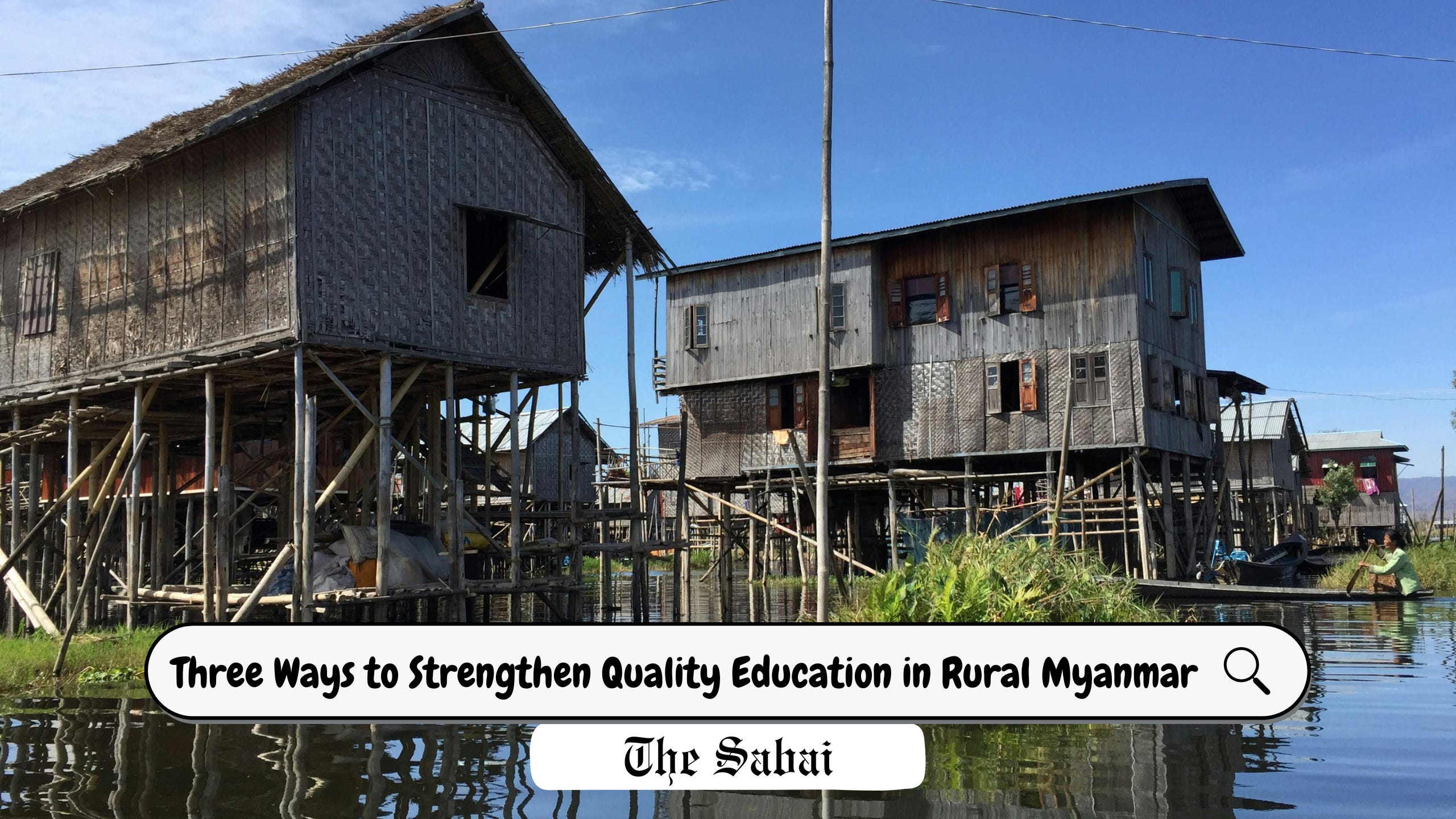
Education in rural Myanmar remains a critical challenge shaped by limited resources, language barriers, economic hardship, and unequal access to qualified teachers, yet it also presents an important opportunity for youth-led initiatives to drive inclusive and sustainable development.
Quality education has long been a central challenge in rural Myanmar due to limited access to schools, a shortage of qualified teachers, and socioeconomic barriers. Myanmar has been struggling with political instability and educational disparities between rural and urban areas. Achieving quality education is fundamental to long-term development and inclusive growth. There are many reasons why students in rural areas cannot access quality education.
Firstly, quality education is strongly reliant on teachers’ competence and the effective allocation of resources. The Myanmar Ministry of Education reports that over 20% of rural teachers are unqualified and often lack formal teacher training or university degrees. Most rural teachers are local people who finished only secondary education. They only use the rote learning method rather than a critical one.
According to administrators from ethnic education departments, language barriers affect the quality of education. Burmese is the only language used in the national curriculum. As a result, ethnic students find it difficult to learn lessons, lag behind peers, and lose interest in learning.
Another one is the economic barrier in rural areas. Economic barriers deeply influence access to quality education in rural areas. Even though learning at a government school is officially free, families struggle with indirect expenses such as uniforms and school supplies. And also, parents with a low education level focus more on immediate survival ahead of long-term education.
Infrastructure shortage is another critical barrier to providing quality education. Many rural schools lack basic facilities such as teaching aids, electricity, clean water, sanitary facilities and safe classrooms. According to the World Bank’s report, more than 70% of rural people lack electricity, which makes it impossible for teachers to use contemporary teaching resources, and for students, it can limit their study time and academic advancement.
Quality education aligned with Sustainable Development Goal 4 and youth participation in local communities are an important part of solving these problems. Young people can be leaders, mentors and innovators who can change educational disparities. Youth-led initiatives use critical methods and localised curriculum textbooks and make education more relevant. Youth can create a robust education system that supports social empowerment and quality education by making investments in youth-led initiatives.
There are 3 ways to strengthen quality education by focusing on sustainable strategies for youth-led initiatives. These are (1) Developing youth leadership and capacities, (2) Encouraging volunteerism and community- based learning, (3) Incorporating youth voices into national education.
Strengthening youth leadership through training in digital literacy and sustainable development would equip them to contribute more effectively. Capacity-building programs offer leadership, educational innovation and social awareness. Expanding youth-led digital literacy initiatives can accelerate community-based learning solutions. Linking youth-led education to livelihood opportunities can increase family support for schooling and reduce the number of students who drop out because of economic barriers.
Volunteer networks, community-based training facilities, and youth-led non-governmental organisations are essential for long-term educational growth. These organisations have successfully reached out-of-school children. However, their long-term impact is still limited by their lack of government recognition. In order to formalise their contributions, non-formal education programs, civil society, and government agencies should work together more closely through certification frameworks, resource support, and policy integration.
To ensure equitable and culturally relevant education in rural Myanmar, it is crucial to invest in young educators, especially those from ethnic minority backgrounds. Both the demand for instruction that respects language and cultural diversity and the lack of trained teachers can be addressed by funding teacher training programs for these young people. Schools that prioritise mother-tongue-based multilingual education (MTB-MLE) and participatory teaching methods tend to achieve higher student engagement. Myanmar may foster a cycle of long-term local leadership and educational resilience by allowing young educators to serve in their own communities.
By establishing Youth Advisory Councils within the Ministry of Education, composed of representatives from diverse regions and ethnic groups, it would help a lot for educational disparities. These councils would offer suggestions for policy implementation, teacher preparation, and curriculum development. Youth representatives could be part of local village education committees that serve as a contact between local government, parents, and schools. This participative approach guarantees the lived reality of youth in rural and conflict-affected areas.
Empowering youth in rural areas is an investment for the country’s long-term stability. Youth engagement offers a potential way for advancing quality education and achieving the broader vision of an inclusive, resilient, and sustainably governed society.
Thiri San Min holds a Bachelor of Arts in International Relations from East Yangon University. She is currently researching the Belt and Road Initiative and its impacts on Myanmar.
“Advocating Sustainability, Shaping Our Future”
Help Sustain The Sabai - Myanmar’s Voice for Sustainability Support The Sabai