


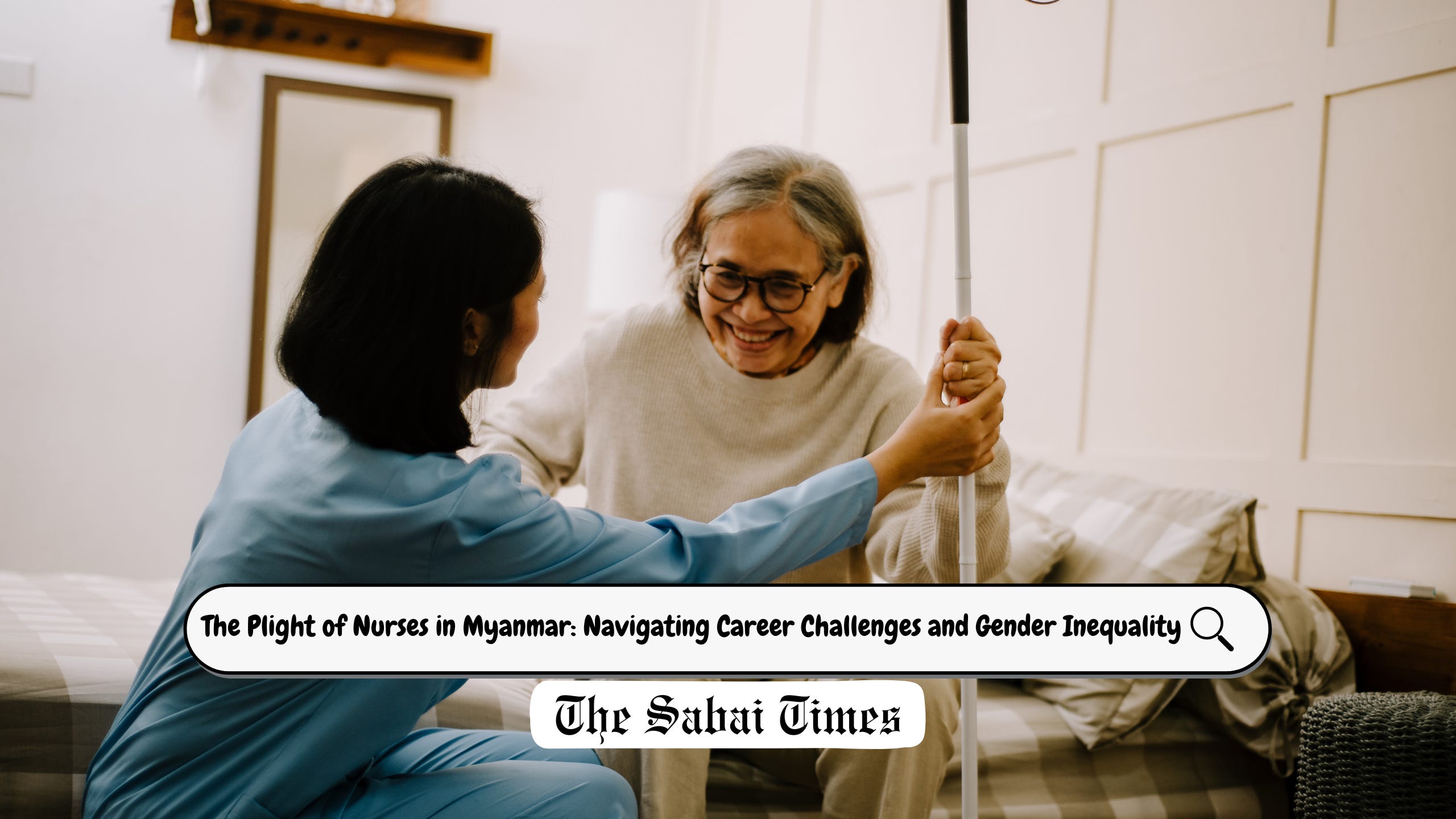
Nursing is often regarded as one of the noblest professions, but nurses face an uphill battle in Myanmar. Long before the military coup of 2021, nurses had already been grappling with societal stereotypes, undervaluation, and gender inequality. Since the coup, however, their lives and careers have taken an even more devastating turn, revealing deep-rooted systemic issues that continue to plague the profession. Nurses are an essential part of the medical world, playing a role just as crucial as that of doctors. However, they remain significantly underpaid despite their hard work and the critical nature of their responsibilities. While there are differences in the scope of duties between doctors and nurses, the pay gap is disproportionately large.
Nurses in Myanmar are often paid a fraction of what doctors earn, and this disparity is further exacerbated by the societal downgrading of the nursing profession. Gender inequality is another harsh reality for women in nursing. Myanmar’s education system historically placed women at a disadvantage from the start. University placements for high school graduates were once based on their final matriculation exam scores, but with unequal cut-off points — higher marks were required for girls to enter certain professions than boys. For instance, a boy and a girl might both score the same 480 marks and share an equal passion for the medical field, but while the boy could go on to become a doctor, the girl may only qualify to become a nurse. Years later, she would likely earn less than half of what her male counterpart makes as a doctor.
The military coup in 2021 only worsened these existing inequalities. The coup upended the lives of all Myanmar citizens, and nurses — particularly those who joined the Civil Disobedience Movement (CDM) — have faced tremendous challenges. Many CDM nurses who chose to stand against the military regime have found their careers jeopardized. Some have been forced to abandon the profession they spent their lives building. Others have been denied the opportunity to extend their medical licenses, a move that has significantly limited their job prospects.
In Myanmar’s major cities, CDM nurses without valid licenses are being recruited at a fraction of the salaries of non-CDM nurses — earning just 400,000 to 500,000 MMK, which is nearly half or even one-third of the average pay. Moreover, these nurses face the constant threat of arrest, making their work not only underpaid but also dangerous.
Exploitation in the private healthcare sector has further fueled this injustice. Some business owners have pressured experienced CDM nurses to restart their careers from entry-level training programs at significantly reduced salaries simply because of a brief absence during their participation in the CDM. Many nurses, finding it nearly impossible to secure stable employment, have migrated to hospitals near the country’s borders. Yet even there, they face workplace abuse, often being assigned menial tasks outside of their job descriptions. Despite these toxic environments, many nurses remain silent, fearing losing their jobs in a difficult employment landscape.
Myanmar’s policies, particularly regarding human rights and gender equality, have direct and far-reaching effects on the lives and career opportunities of women. This is especially true for nurses, who continue to be subjected to systemic discrimination. It is time for the country’s policymakers to address these issues and ensure that women, including CDM nurses, are granted equal opportunities and fair treatment in the workforce. They deserve the chance to reclaim their professional rights and benefits, paving the way for a more equitable future in Myanmar’s healthcare sector.
Dr. Htet Khaing Min is a medical doctor from Myanmar who recently served as the Project Coordinator for Remote Health Projects in Community Health Worker (CHW) programs, focusing on the hard-to-reach border areas of Naga and Karen States.
“Advocating Sustainability, Shaping Our Future”
The opinions expressed in these articles do not represent the official stance of SRIc - Shwetaungthagathu Reform Initiative Centre. The Sabai Times is committed to publishing a range of perspectives that may not align with editorial policy.
Help Sustain The Sabai Times - Myanmar’s Voice for Sustainable Development. Support The Sabai Times
