

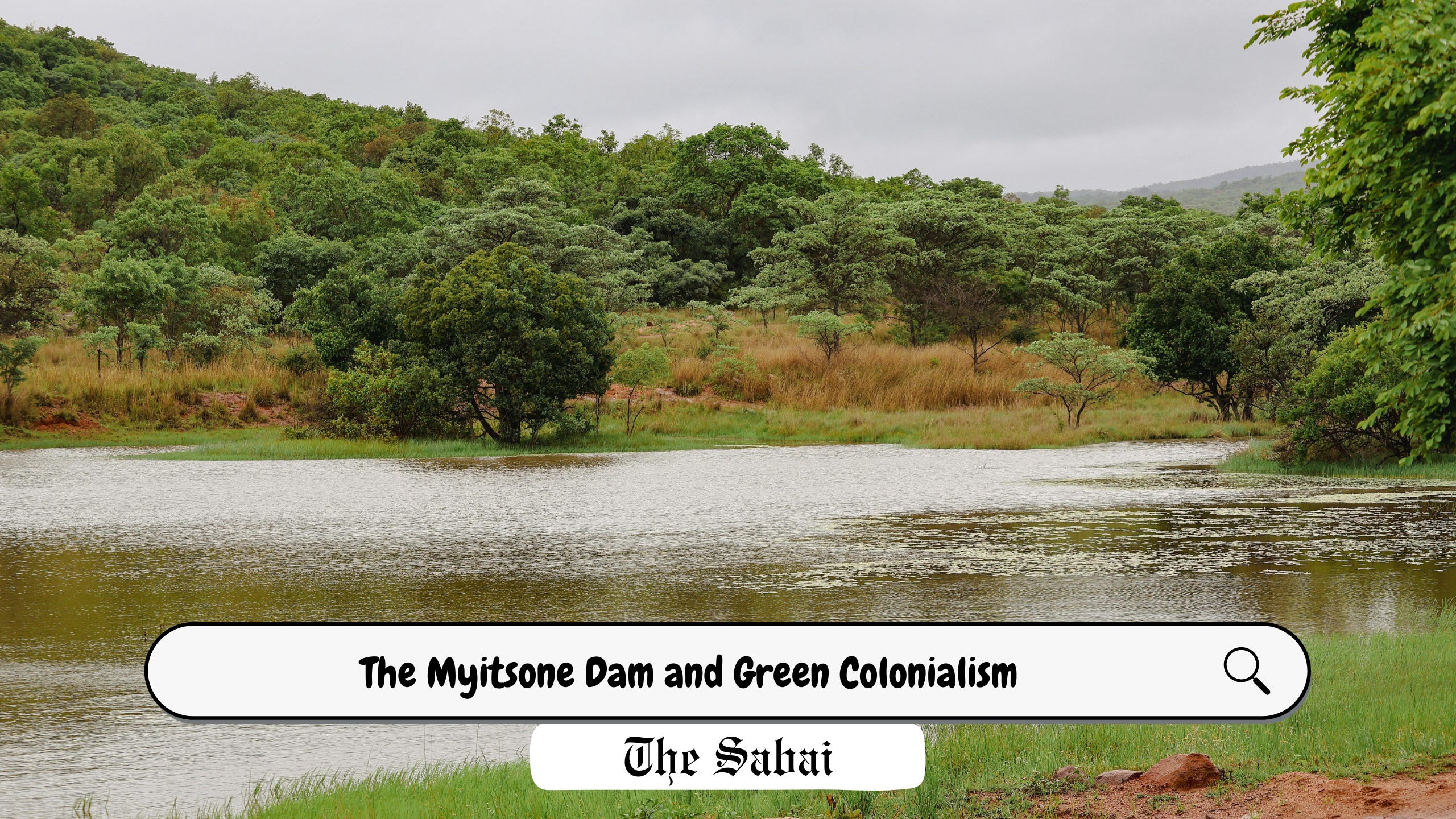
Myanmar's military government is leveraging the revival of the Myitsone Dam project as a diplomatic tool to secure support from China, resulting in severe environmental and social exploitation in the Kachin frontier.
Key Takeaways:
Political Leverage Over Economics: The military government uses the Myitsone Dam revival as a diplomatic tool to secure political and economic backing from China, prioritising political exchange over development.
Resource and Green Colonialism: The dam project drives the expansion of rare earth element extraction, creating a “territorial sacrifice zone” that serves external demands under the guise of green initiatives.
Frontier Marginalisation: This model of authoritarian extraction concentrates environmental destruction, forced displacement, and political marginalisation within Kachin communities, reinforcing unequal governance structures.
Myanmar’s military government announced that it wanted to revive the long-suspended Myitsone Dam, with a statement that the Myitsone Dam will be the answer to Myanmar’s growing energy crisis. On the surface, it is a reasonable explanation for the country’s crisis. The country’s power grid has suffered severely since the military coup in Myanmar in 2021, and the electricity is frequently interrupted, affecting households and businesses throughout the nation. Yet framing Myitsone as an energy project misses the important story. The dam has come to represent so much more than just a large-scale energy project; it’s a symbol of how global efforts for clean energy can drive political dependency, resource extraction, and the burden on communities that are not directly benefiting from the dam’s construction.
This contradiction sits at the heart of what many scholars describe as Green Colonialism. The term does not imply that renewable energy is harmful. Instead, it refers to situations where projects promoted under the banner of sustainability recreate the patterns of inequality while allowing powerful governments or corporations to secure land, water, and minerals, while local communities have to bear the burden of environmental and social consequences. In other words, the technologies enabling a greener future are not necessarily fair; they are shaped by political choices and decisions on who changes their landscape, who will bear the burden, and who will ultimately gain from the transition.
This is perhaps nowhere better illustrated than in Kachin State, Myanmar. The Myitsone Dam is located at the confluence of Mali and N’Mai rivers, the headwaters of Ayeyarwady (also called Ayeyawaddy) River, Myanmar’s cultural and ecological lifeline. The project has been met with persistent opposition since its initiation in 2009, since the project has displaced Kachin communities, had negative impacts on biodiversity and there is a widespread concern that most of the electricity would be exported to China and not used for energy in the country. In 2011, the project was suspended after much public pressure forced President Thein Sein to back down, one of the country’s significant environmental victories. More than a decade later, however, Myanmar’s military regime appears willing to revisit the matter, the deeper its political and economic dependence on China grows.
The timing is no coincidence. China’s demand for strategic resources has been growing at a fast rate, as the world pushes forward with transitioning to decarbonised economies. Myanmar occupies a central position within the China–Myanmar Economic Corridor (CMEC), a key component of the Belt and Road Initiative that provides China with overland access to the Indian Ocean. Hydropower, transmission infrastructure, and the rare earth minerals used in electric vehicles and wind turbines have become central to national energy security and industrial policy. Now, with the proposed dam in its midst, Kachin State finds itself in a strategic position in this transition, with one of the world’s most important sources of heavy rare earth elements.
The significance of Kachin State extends well beyond hydropower. Over the past decade, the region has now supplied one of the world’s most significant sources of heavy rare earths, particularly dysprosium and terbium, which are essential for permanent magnets used in electric vehicles, offshore wind turbines, military technologies and advanced electronics. As China tightened environmental regulations on domestic mining, production increasingly shifted to Myanmar, where weak governance and ongoing conflict created favourable conditions for extraction. Weak governance and ongoing conflict made it attractive for production to move across the border. The materials are essential to clean-energy technologies, with the environmental costs of having left communities with polluted waterways, deforested hillsides, and environmental effects and forced migration that benefit the consumers in other parts of the world.
The juxtaposition of the Myitsone Dam and the Kachin’s rare earth boom is a troubling paradox. The very same global transition celebrated for reducing carbon emissions can also lead to new forms of injustices when the need for clean energy comes at the cost of the sacrifices of politically marginalised areas. The hydropower and mining industries are not separate stories; they should be understood as part of the same political economy, where the interdependence of infrastructure, critical minerals and geopolitical influence strengthen each other. The world’s need for renewable energy is no longer a question. The question is whether or not a transition can be considered “green” if its environmental burdens continue to fall so unevenly. A just energy transition goes beyond replacing fossil fuels with renewable energy.
It also requires institutions that are capable of protecting the rights of affected communities, providing meaningful participation of community voice in environmental decision-making, and sharing the benefits and burdens of decarbonisation more equitably. Without these regulations, the transition risks becoming more than just a technological shift; it may be a new geography of environmental injustice.
Ingyin Hmwe is a researcher at Norwegian Agency for Exchange Cooperation (NOREC) and an MSc candidate in Climate Change and Sustainable Development at Asian Institute of Technology (AIT), Thailand.
“Advocating Sustainability, Shaping Our Future”
Help Sustain The Sabai - Myanmar’s Voice for Sustainability Support The Sabai