

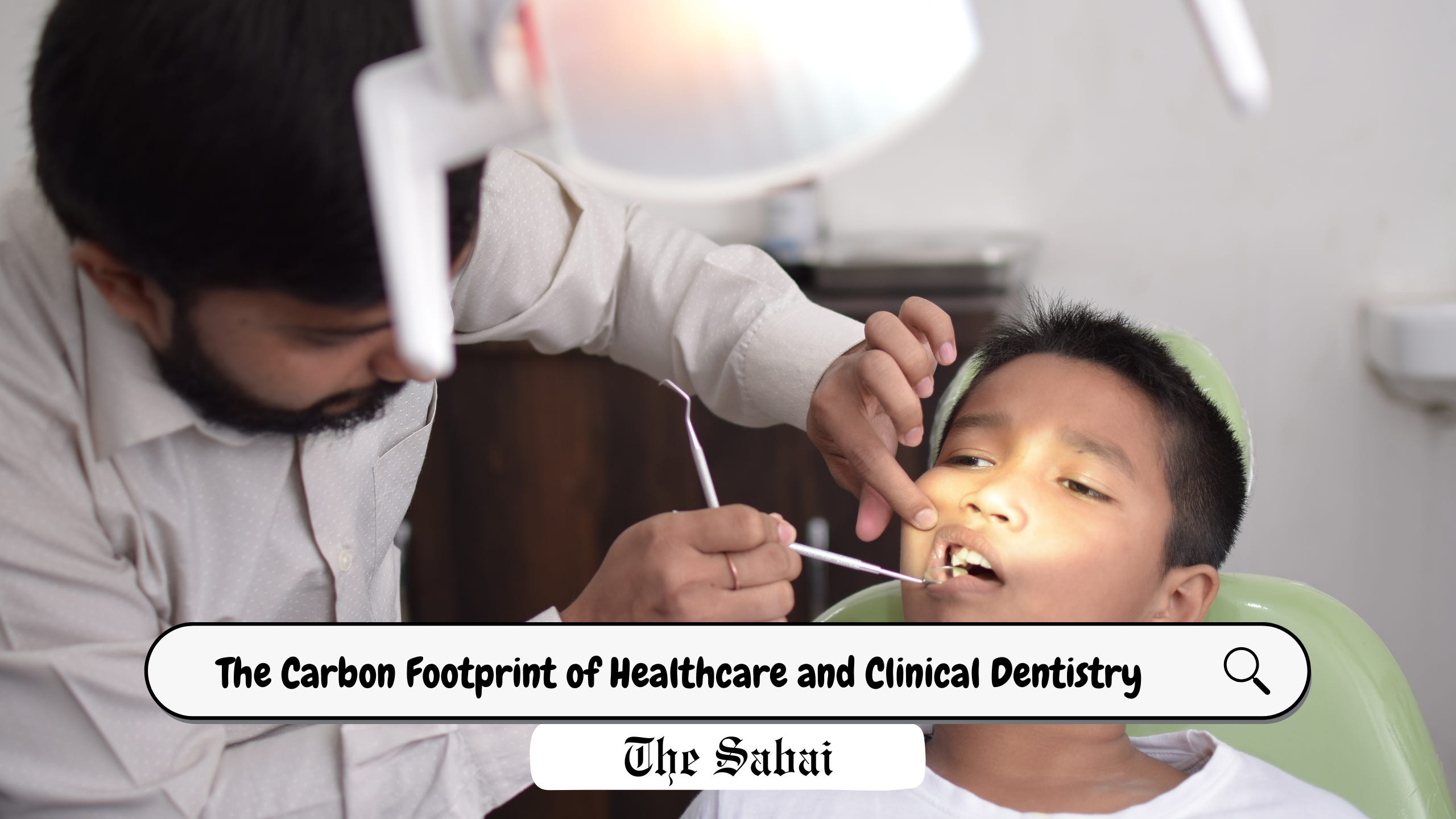
Healthcare contributes significantly to global greenhouse gas emissions, and dental services can reduce their environmental impact through sustainable practices without compromising patient safety.
Key Takeaways:
Energy use, single-use plastics, PPE, water consumption, clinical waste, and supply chains all contribute to dentistry’s carbon footprint.
Better waste segregation, digital documentation, energy-efficient equipment, and smarter inventory management can reduce environmental impact while maintaining safety standards.
Carbon monitoring, waste audits, life-cycle assessments, and sustainable procurement can help dental services make measurable and responsible environmental improvements.
Introduction
Healthcare exists to improve people's health. Yet, it also contributes to climate change. Globally, the healthcare sector is responsible for around 4.4% of greenhouse gas emissions, making it one of the world's largest sources of carbon emissions. Dentistry is no exception. Every day, dental clinics consume electricity, water, plastics, chemicals, and large amounts of single-use equipment. These resources are essential for patient safety, but they also create a considerable environmental burden. As climate change increasingly affects population health, healthcare organisations are being asked to rethink how care is delivered. Sustainability is no longer just an environmental issue. It is a public health priority.
This essay argues that clinical dentistry can reduce its environmental impact without compromising infection control. By adopting Green Dentistry principles, strengthening clinical governance, and using evidence to guide decision-making, dental services can provide safer and more sustainable healthcare.
Why dentistry has a carbon footprint
Most people associate carbon emissions with transport or industry. Healthcare is often overlooked. However, delivering healthcare requires huge amounts of energy and materials. Dental clinics are a particular source of interest. Every patient appointment involves disposable gloves, masks, plastic barriers, sterilized instruments, disinfectants, packaging, and electricity. Equipment such as autoclaves, compressors, suction units, and X-ray machines also consume significant amounts of energy throughout the day. The COVID-19 pandemic made this even more challenging. Infection control became stricter, increasing the use of disposable PPE and single-use plastics. These measures were necessary to protect patients and staff. However, they also increased the volume of healthcare waste. This is where Green Dentistry becomes important. Rather than reducing infection control, Green Dentistry focuses on reducing unnecessary waste. Simple changes such as digital records, better waste segregation, energy-efficient equipment, and sustainable purchasing can lower emissions while maintaining high standards of patient care.
Why the data matters
Reducing emissions sounds like a good idea. But healthcare decisions cannot be based on assumptions. They need evidence. This is where data plays a crucial role. Healthcare managers need to know which interventions reduce carbon emissions, and which simply shift the problem elsewhere. Carbon footprint assessments, waste audits, and energy monitoring provide this evidence. For example, if a clinic installs energy-efficient sterilisation equipment, electricity use can be measured before and after the change. Similarly, waste audits can show whether better recycling policies reduce clinical waste or simply increase administrative workload. Coming from a statistics and public health background, I believe evidence should guide every sustainability decision. Reliable data allows organisations to evaluate costs, measure environmental benefits, and ensure that patient safety is never compromised. Without good data, sustainability becomes an aspiration rather than a measurable outcome.
One important aspect that is often overlooked is the healthcare supply chain. A dental clinic's carbon footprint is not limited to what happens inside the treatment room. Every disposable glove, face mask, syringe, dental bur, and disinfectant has already consumed energy and resources before it reaches the clinic. Raw materials must be extracted, manufactured, packaged, transported, and eventually disposed of. Each stage contributes to greenhouse gas emissions. This means that sustainability is not simply the responsibility of clinicians. Manufacturers, suppliers, policymakers, and healthcare organisations all play a role. Choosing products from suppliers with sustainable manufacturing practices can reduce environmental impacts across the entire lifecycle of healthcare products.
However, these decisions should always be guided by evidence. A product labelled as "green" is not necessarily more sustainable when its full life cycle is considered. Life cycle assessments allow organisations to compare products based on their environmental impact from production to disposal. This provides a stronger foundation for procurement decisions than relying on marketing claims alone.
From a public health perspective, sustainable procurement is an investment in future health. Lower emissions today contribute to cleaner air, healthier communities, and more resilient healthcare systems tomorrow. Ultimately, improving sustainability requires thinking beyond individual clinics and recognising that every decision within the healthcare system has environmental consequences.
Turning policy into practice
Although sustainable dentistry is gaining attention, putting it into practice is not always easy. The biggest challenge is balancing environmental goals with infection control. Many disposable products cannot simply be replaced because they protect patients from infection. Financial pressures also make it difficult for smaller clinics to invest in greener technology.
During my placement at Zayn Dental Clinic, I saw how clinical governance ensured high standards of infection prevention. Sterilization procedures were carefully monitored, PPE protocols were followed, and clinical waste was managed according to regulations. These processes were essential for patient safety. At the same time, I noticed opportunities to improve sustainability. Better waste segregation could reduce unnecessary incineration. Digital documentation could reduce paper use. Smarter inventory management could minimize expired stock and unnecessary waste. These changes may seem small. Together, however, they can make a meaningful difference. Sustainability should not be treated as a separate project. It should become part of everyday clinical governance and continuous quality improvement.
Conclusion
Healthcare has a responsibility to protect both people and the environment. Dentistry is no exception. While infection control must always remain the priority, there is clear evidence that dental practices can become more sustainable without compromising patient safety. Moving forward, healthcare organizations should embed sustainability into clinical governance. This includes routine carbon reporting, investment in energy-efficient technologies, staff education, and stronger procurement policies. Environmental indicators should also become part of quality improvement programmes alongside traditional clinical outcomes. These actions support the United Nations Sustainable Development Goals, particularly those related to health, responsible consumption, and climate action.
Ultimately, creating greener dental services is not just about reducing waste. It is about building a healthcare system that protects today's patients while safeguarding the health of future generations.
Jananee Bharkavi Natarajan holds a Master of Public Health (MPH) in Epidemiology from the University of Glasgow, UK. She is particularly interested in epidemiology, health systems, health equity, and improving access to preventive healthcare for underserved populations.
“Advocating Sustainability, Shaping Our Future”
Help Sustain The Sabai - Myanmar’s Voice for Sustainability. Support The Sabai