


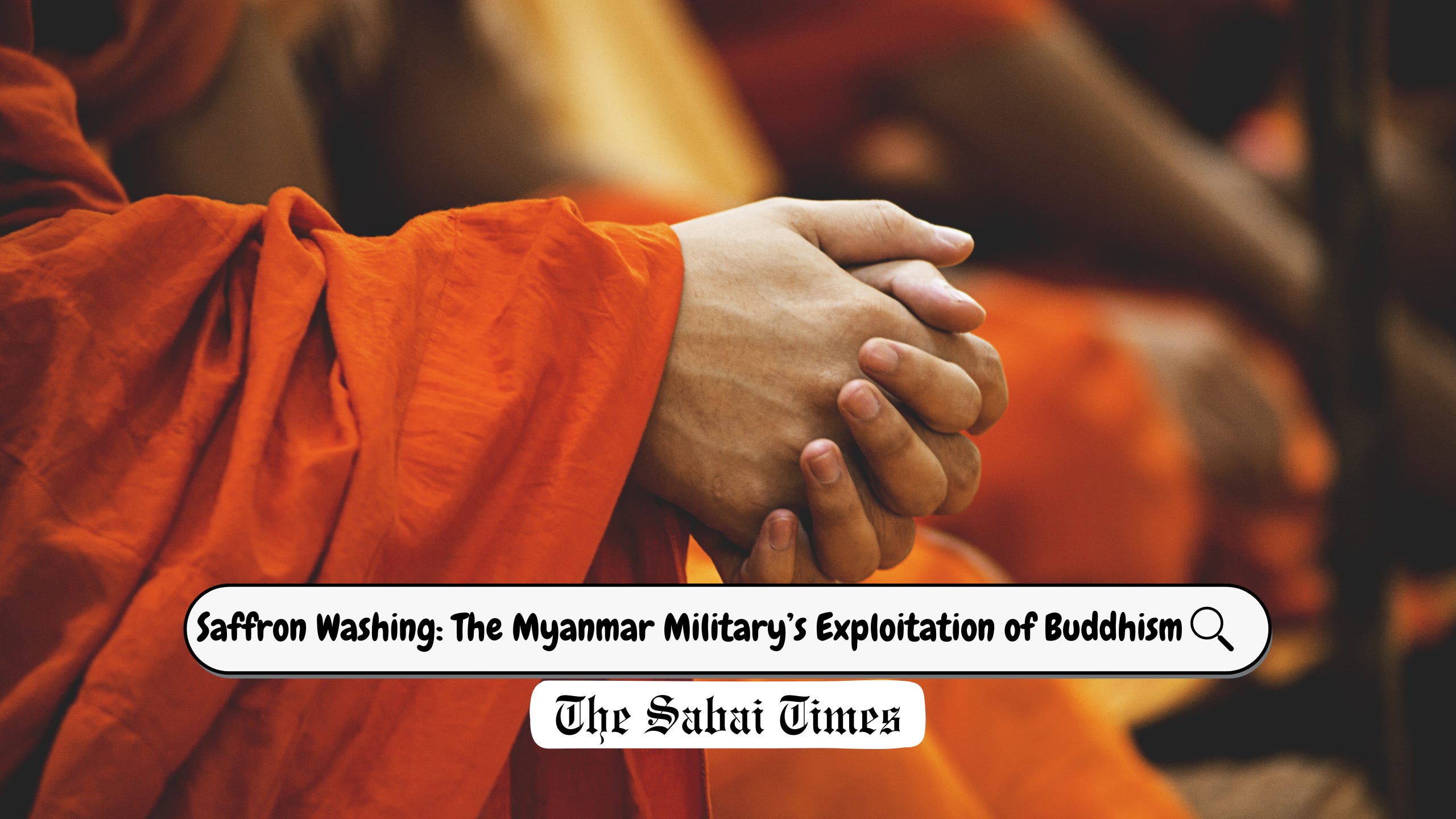
In Myanmar, the military has adeptly employed Buddhism as a tool for leveraging its political power. This practice can be described as “Saffron Washing,” a nod to the concept of “greenwashing,” where entities falsely present themselves as environmentally friendly. This article explores how Myanmar’s military has strategically used Buddhism to legitimize its rule and maintain control while also examining the broader implications of this manipulation.
Before diving into the details, it is essential to revisit the nation’s history and understand its deep connection with the growth of Buddhism. Various Burmese dynasties utilized Buddhism to solidify their political power. According to historical records, Buddhism arrived in Burma (Myanmar) in the late 11th century and was patronized by the monarchy. King Anawrahta utilized Buddhism as the cornerstone to consolidate his political power and establish the Pagan dynasty of Burma (849-1297 CE). Since then, Buddhism has become the primary religion.
This piece was initially published in The Diplomat, and read the full article on The Diplomat.
Tin Shine Aung is the Consulting Director at the Shwetaungthagathu Reform Initiative Centre (SRIc). In addition to his professional roles, Tin Shine Aung is pursuing a PhD in Sustainability Science at the University of Lisbon, Portugal.
“Advocating Sustainability, Shaping Our Future”
Help Sustain The Sabai Times - Myanmar’s Voice for Sustainable Development Support The Sabai Times