

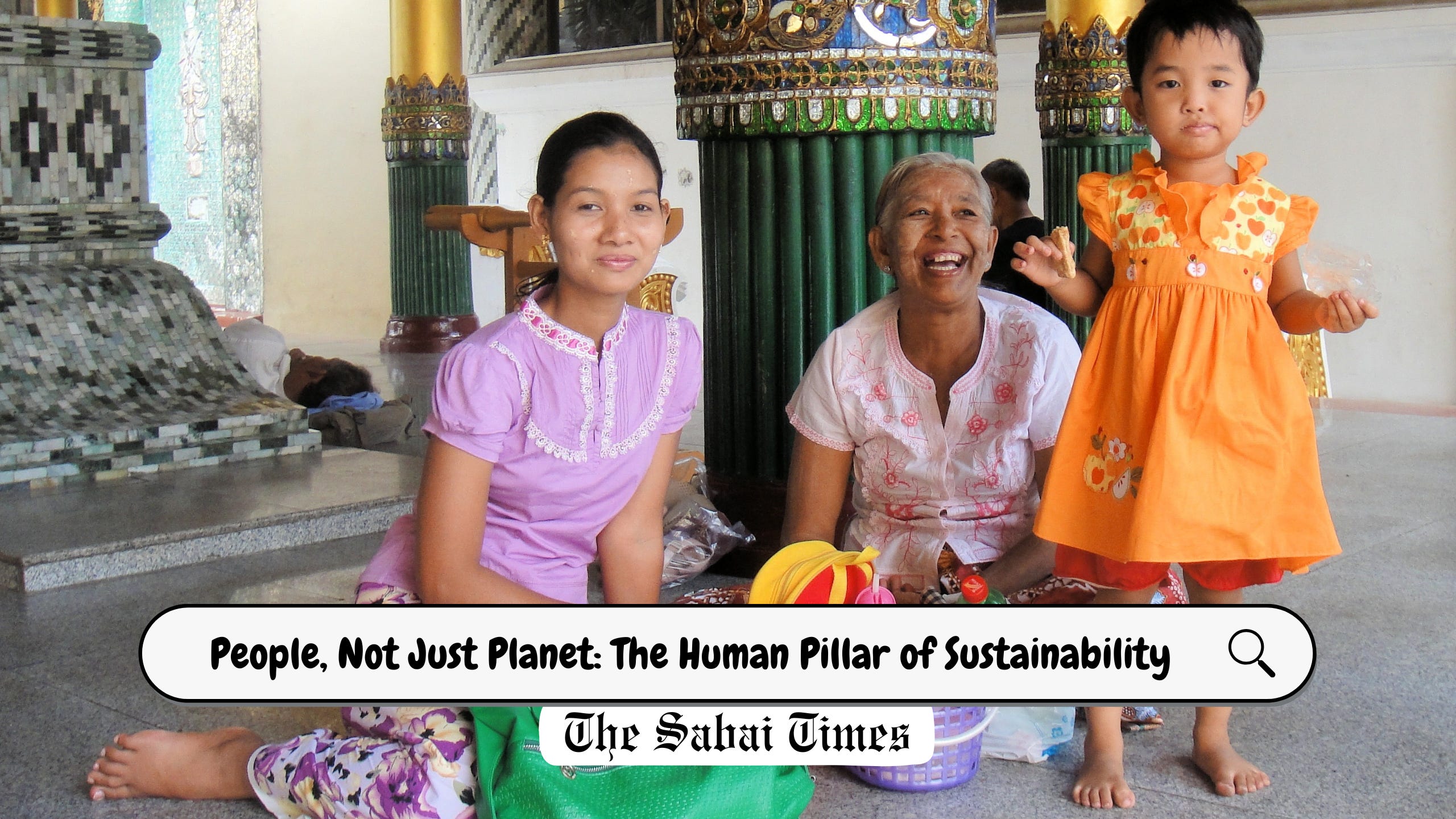
While climate action and green innovation dominate the sustainability agenda, actual progress demands equal attention to the human dimension, social sustainability.
Key Takeaways:
Social sustainability is essential for long-term resilience, focusing on equity, inclusion, community well-being, and environmental goals.
Core components- social cohesion, inclusion, resilience, and process legitimacy- are foundational to building just and stable societies.
Grassroots initiatives like the Edu4SD project demonstrate how civic education and sustainability literacy can drive meaningful social transformation even in fragile contexts.
In today's global discussions about sustainability, the focus often centres on renewable energy, climate change, and green technology. These environmental and economic components are undeniably important, but another vital pillar of sustainability that usually doesn't receive the same attention is social sustainability. Without addressing the human element of sustainability, even the most sophisticated climate policies and green initiatives risk falling short. Social sustainability emphasizes living, working, interacting, and building communities. It's about ensuring fairness, inclusion, and equity in the social fabric, which is critical for a sustainable future.
The Essence of Social Sustainability
At its core, social sustainability focuses on creating communities where people's needs are met equitably and with dignity. It ensures everyone can access the opportunities and resources needed for a healthy, fulfilling life. Social sustainability isn't just a nice-to-have; it's essential to creating a resilient, inclusive society capable of enduring the long term.
Social sustainability aligns directly with the Sustainable Development Goals (SDGs), particularly SDG 4: Quality Education, SDG 5: Gender Equality, SDG 10: Reduced Inequalities, and SDG 11: Sustainable Cities and Communities. These goals emphasize the need for inclusivity, equal opportunities, and a sense of belonging for all individuals, regardless of their background, gender, or socio-economic status.
Four Key Components of Social Sustainability
Social sustainability includes several components that contribute to its overall success. These are
Social Cohesion
Social cohesion is the glue that holds a community together. A cohesive society is one where people share common values, trust one another, and are committed to collective well-being. When socially cohesive, communities can weather crises more effectively and bounce back stronger. Cohesion fosters mutual understanding, collective action, and a sense of shared purpose. Communities built on trust are likelier to engage in conflict resolution, public health initiatives, and governance that benefits everyone.
Inclusion
Inclusion is a fundamental aspect of social sustainability. It ensures that everyone, regardless of race, gender, income, or background, can access the resources, services, and opportunities they need. Inclusive development goes beyond basic access; it ensures that marginalized communities are not left behind in pursuing progress. Inclusivity also means allowing everyone to participate in decision-making processes that affect their lives. This principle directly aligns with SDG 5: Gender Equality and SDG 4: Quality Education, which stresses the importance of providing equal opportunities and empowering all individuals, particularly those historically excluded.
Resilience
Resilience is the ability of individuals and communities to adapt, recover, and thrive in the face of adversity. In our increasingly unpredictable world, resilience has become a cornerstone of social sustainability. From natural disasters to political instability, socially sustainable communities are better equipped to handle and recover from shocks. They not only survive crises but grow stronger from them. Building resilient communities involves creating safety nets, fostering social networks, and ensuring everyone has the resources and support needed to rebuild and adapt.
Process Legitimacy
For a society to be socially sustainable, its processes must be transparent, fair, and inclusive. When decisions are made through legitimate processes, communities are more likely to trust institutions and participate in governance. This is where democracy and public trust come into play. Process legitimacy involves ensuring that all voices are heard, especially those from marginalized or vulnerable groups, and that decisions are made accountable and transparent.
Myanmar's Path to Social Sustainability
While social sustainability is a global concern, its importance is particularly evident in countries like Myanmar, where socio-political challenges often impede long-term progress. Despite these challenges, efforts to promote social sustainability are growing.
One example is the Shwetaungthagathu Reform Initiative Centre (SRIc), which has been instrumental in promoting social sustainability through its Edu4SD campaign. This initiative focuses on educating and empowering communities in Myanmar to understand and engage with the Sustainable Development Goals (SDGs). Through webinars, publications, and community outreach, SRIc bridges the gap between sustainability theory and local practice, ensuring that Myanmar's citizens have the tools to create a more sustainable and equitable future.
The work done by organizations like SRIc demonstrates that education is a powerful tool in promoting social sustainability. Even in the face of political instability, educating people about social cohesion, inclusion, and resilience can foster long-term change. In a recent article on LinkedIn, SRIc emphasized the importance of civic dialogue and local engagement, showing how a collective understanding of sustainability concepts can empower people to drive social change from the ground up. This emphasis on education gives hope that change is possible, even in challenging circumstances.
Why Social Sustainability Matters Now
Social sustainability is not just a concept, but a necessity in today's world. As we grapple with widening inequality and face global challenges like climate change, political instability, and economic disparities, the role of social sustainability becomes even more pronounced. The World Bank's recent report underscores that social sustainability remains underprioritized, a fact that is crucial for long-term development. Without social sustainability, even the most advanced technological and economic solutions will fail to address the needs of the people they serve.
A sustainable future cannot be built solely through technology or finance; it requires a human-centred approach. This approach places the well-being of people at its heart, ensuring that no one is left behind in the pursuit of sustainability. By stressing the human-centred approach, we underscore the importance of prioritizing people's well-being in all sustainability efforts, making the audience feel the significance of this perspective.
Conclusion: Building a Sustainable Future Together
Sustainability is often viewed through the lens of science and technology, but it is a human issue at its core. A truly sustainable world is one where communities are inclusive, resilient, and united in their collective goals. Social sustainability fosters the human connections that enable societies to thrive. By investing in social cohesion, inclusion, resilience, and legitimacy, we support the SDGs and build a future where everyone can flourish. As we continue to confront the challenges of the 21st century, it's clear that the key to a sustainable future lies in our ability to care for one another.
Min Thant is an experienced educator pursuing a Bachelor of Education at SEGi University in Malaysia. With over nine years of teaching experience, he is committed to advancing education in Myanmar through innovative curriculum development and integrating blended learning methodologies.
“Advocating Sustainability, Shaping Our Future”
The opinions expressed in this article do not represent the official stance of SRIc - Shwetaungthagathu Reform Initiative Centre. The Sabai Times is committed to publishing a range of perspectives that may not align with editorial policy.
Help Sustain The Sabai Times - Myanmar’s Voice for Sustainable Development Support The Sabai Times