


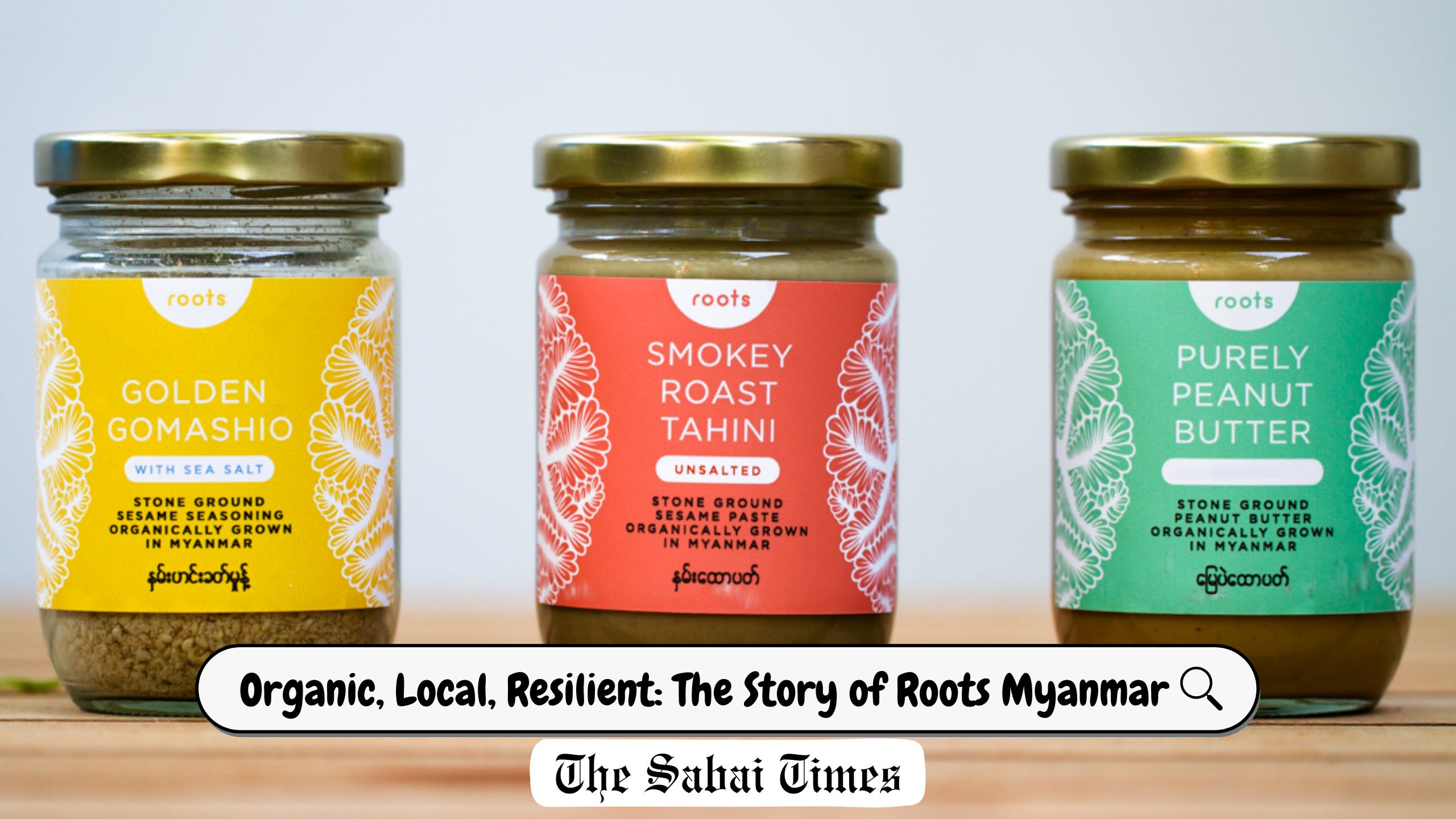
Did you know Myanmar ranks among the top 5 producers of sesame and top 10 for peanuts globally, but most of these crops leave the country raw, earning farmers almost nothing? Khun Zaw Hein from Shwetaungthagathu Reform Initiative Centre (SRIc) had the opportunity to explore this question with the Roots Myanmar Team over a Zoom interview. By promoting organic farming, paying premiums for crops, and building a sustainable supply chain, Roots is creating a system that benefits both farmers and the environment. Join me as we dive into their story and discover how this innovative initiative is transforming agriculture, communities, and the future of food in Myanmar.
Khun Zaw Hein: Can you tell us the story behind Roots Myanmar, what inspired its focus on organic foods, and how sustainability shapes its core mission and day-to-day operations?
Roots Myanmar: Although Myanmar ranks among the top global producers of sesame (top 5) and peanuts (top 10), we saw a significant issue: most of these crops are exported as raw seeds, and local processing is minimal. Farmers end up in an unfair situation, selling their crops at prices set by brokers and intermediaries, which leaves them with low income and instability. Many turn to chemical fertilisers and pesticides to boost yields, which harm soil health, raise costs, and compromise food safety over time. The long-term effects on both livelihoods and the land are troubling.
Roots was founded to change this. We promote organic farming, fair pricing, and local processing. By paying farmers a premium for organic production, we help them restore soil health while earning more sustainably.
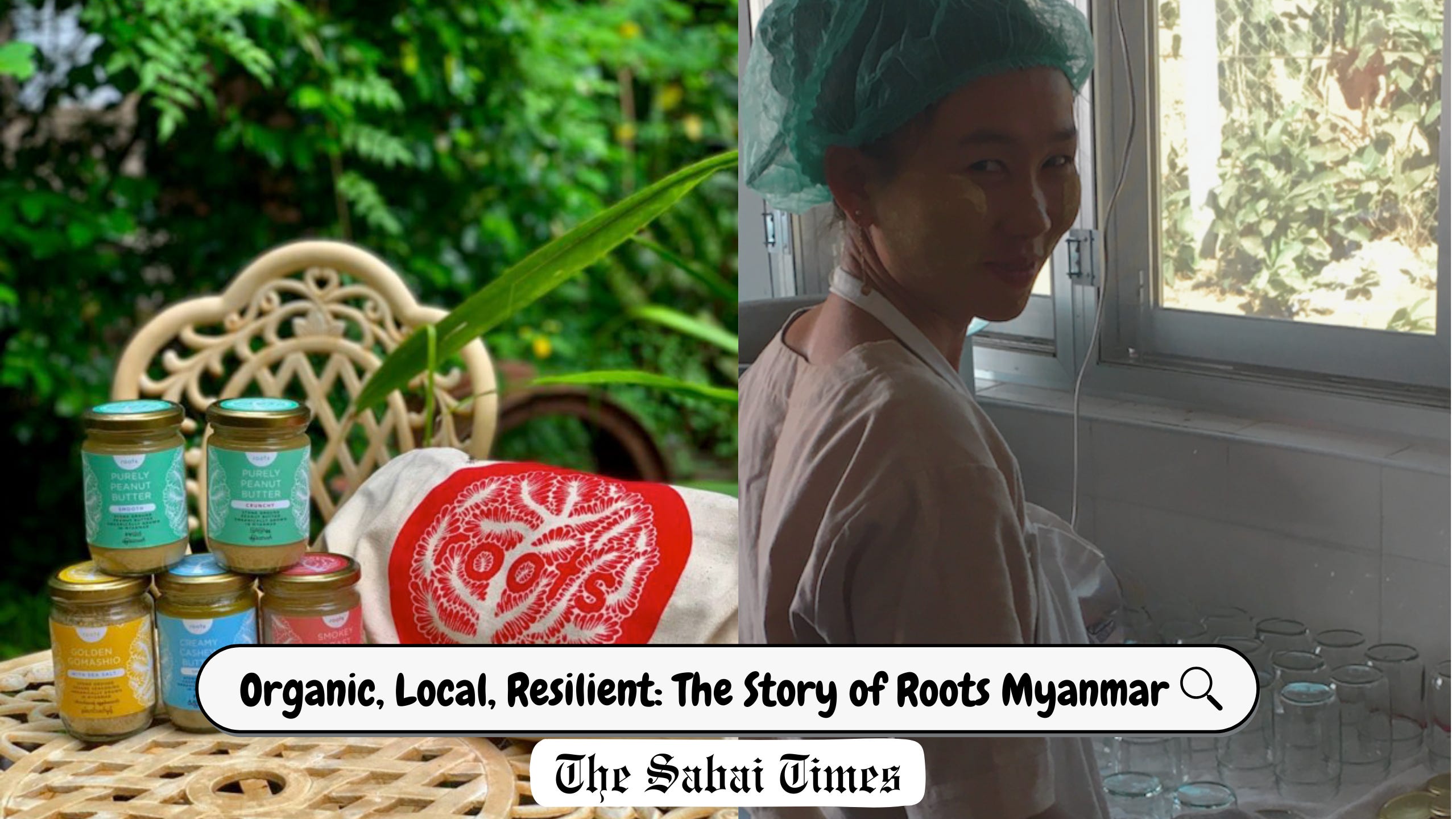
For us, sustainability also encompasses social aspects. In Magwe, many women, especially mothers, find it hard to secure stable jobs that fit their family responsibilities. We intentionally provide flexible job opportunities in production and packaging, allowing women to earn a dependable income while staying close to home. At the heart of Roots is a simple commitment: to deliver safe, nutritious, and high-quality food that meets international standards, for people who care about what they eat and how it’s made.
Khun Zaw Hein: How does Roots balance promoting sustainable livelihoods for local communities with ensuring long-term environmental conservation and resource management?
Roots Myanmar: At Roots, we believe true sustainability must support both people and the planet. That’s why we are building an alternative market that empowers farmers to return to organic practices that protect the soil and reward the effort required to farm sustainably.
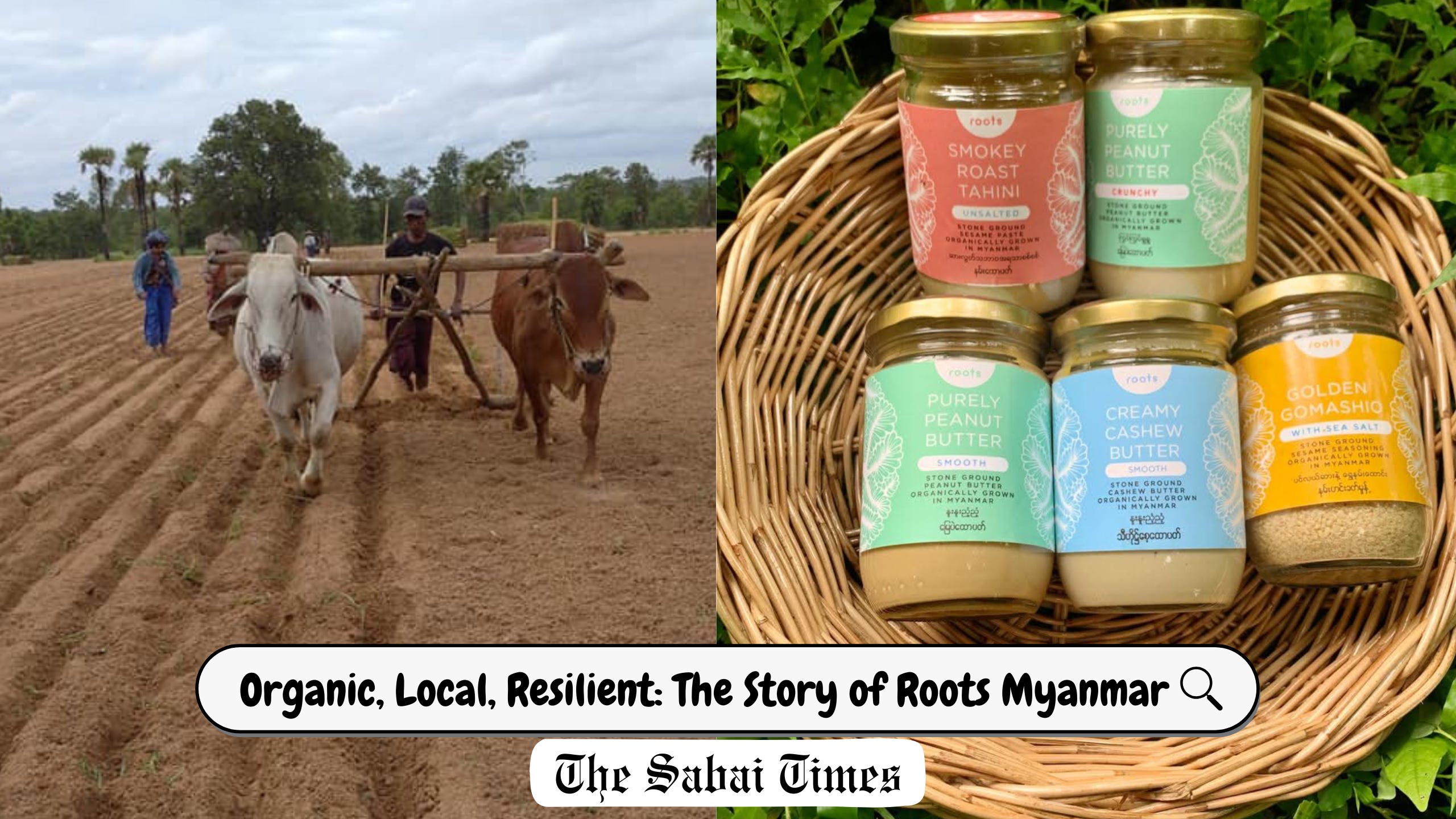
Farmers typically earn the same price in today's markets whether their crops are grown organically or with chemical fertilisers. Yet organic farming is more labour-intensive, costlier, and often yields less. To bridge this gap, we pay a premium, typically 25–35% above market rates, so farmers are genuinely incentivized to transition to organic methods. As more farmers see the demand for organic produce and the potential for better income, they are encouraged to change. Over time, this leads to healthier soil, less chemical use, and a lasting positive environmental impact, field by field.
Sustainability for us is also social. We offer meaningful job opportunities for women in our community, supporting them in production, leadership, and management roles. This approach builds an inclusive and resilient supply chain, grounded in the well-being of both the land and the people who rely on it.
Khun Zaw Hein: Could you share some specific examples of how Roots measures its impact, socially, economically, or ecologically, and what lessons have you learned from these efforts?
Roots Myanmar: At Roots, we see measuring impact as crucial for tracking progress and staying accountable to the communities we serve. While we are still learning and improving, here are some ways we’ve been measuring our social, economic, and ecological footprint so far:
Social Impact
We may be small, but we are intentional. We’ve created flexible work opportunities for local women—especially mothers—who often cannot take on full-time roles due to family responsibilities. Beyond employment, we aim to empower women through leadership and decision-making roles within our operations. For us, impact is not just about the number of jobs created, but the quality, flexibility, and dignity those jobs provide.
Economic Impact
We consistently pay farmers 25–35% above the local wholesale market price for organic crops. In today’s environment, where the GAP (Good Agricultural Practices) market has struggled due to the political crisis, many farmers have lost access to the premium prices they once relied on. By continuing to purchase organic seeds at fair rates, we provide a stable and reliable market when others have collapsed. This relieves our partner farmers, many of whom would otherwise be forced to sell at wholesale prices dictated by brokers. Our pricing model protects farmer income and reinforces the value of staying committed to organic methods, even in difficult times.
Ecological Impact
While we don’t yet conduct complete soil testing, many farmers report healthier soil texture and fewer pest issues after just 2-3 seasons of organic farming. We also help our partner farmers enrol in a soil testing program run by Kokkoya Organics, which assists them in understanding and improving soil health. We’ve learned that long-term ecological change takes time, but stories from the field are just as important as the data we collect.
Our Key Lesson
Impact measurement doesn’t need to be perfect to be meaningful. Listening closely to farmers and workers, understanding what works for them and what doesn’t, has proven as valuable as any formal data we gather.
Khun Zaw Hein: Myanmar faces significant political and economic uncertainties. What unique risks or opportunities does this context present for running a sustainability-focused business like Roots?
Roots Myanmar: Myanmar’s current crisis has brought considerable challenges, including inflation, supply chain disruptions, and strict import restrictions. For instance, we’ve faced difficulties sourcing jars, which are the only packaging item we still import. Everything else, however, we proudly source locally.
Rather than being discouraged, we’ve chosen to adapt. These challenges have also created new opportunities. With imported products becoming more expensive and less accessible, consumers increasingly seek high-quality local alternatives. This is where we see a chance to step in.
We fill a meaningful gap in the market by producing locally, partnering with trusted suppliers, and offering products that match imported quality at a better value. For us, sustainability also entails building economic resilience—turning crises into chances for growth and long-term progress.
Khun Zaw Hein: Looking ahead, what is Roots Myanmar’s vision for deepening its sustainability work, and what role do you see for local communities, young people, or international partners in that vision?
Roots Myanmar: At Organic Roots Myanmar, our sustainability vision is grounded in long-term care for the land, the food we grow, and the people behind it. We aim to create a system where organic farming, fair trade, and community well-being work seamlessly.
Local Communities
They are the foundation of everything we do. We commit to supporting farmers through guidance for organic transitions, guaranteed pricing, and greater leadership roles for women in processing and logistics.
Youth
We view young people as future guardians of sustainable food systems. Through farm visits, content creation, and small-scale entrepreneurship rooted in organic values, we aim to inspire and involve them. The more they connect with food at its source, the stronger our collective future will be.
International Partners
We welcome thoughtful collaboration with those who share our commitment to sustainability and ethical trade. This includes responsibly expanding market access for Myanmar’s organic products and building stronger global value chains.
Now, more than ever, supporting enterprises like Roots is vital. In uncertain times, partnerships help us remain strong as a company and as a community-focused model that sustains rural livelihoods and promotes ecological farming. Supporting Roots means investing directly in grassroots sustainability, rural women’s employment, and ethical food systems in Myanmar. We invite allies who want to create something lasting, meaningful, and impactful.
Khun Zaw Hein is a Research Assistant at the Sustainability Lab of the Shwetaungthagathu Reform Initiative Centre (SRIc) and recently completed a Diploma in Social and Development Studies.
“Advocating Sustainability, Shaping Our Future”
Help Sustain The Sabai Times - Myanmar’s Voice for Sustainable Development Support The Sabai Times