


Sustainability is often associated with protecting the environment, but it is also about improving the quality of life for people today without creating problems for future generations.
Key Takeaways:
Plastic is a waste-management problem, not just an environmental problem.
Bans alone are insufficient; incentives, infrastructure, and community action are needed.
Myanmar can combine modern solutions with traditional, locally rooted practices.
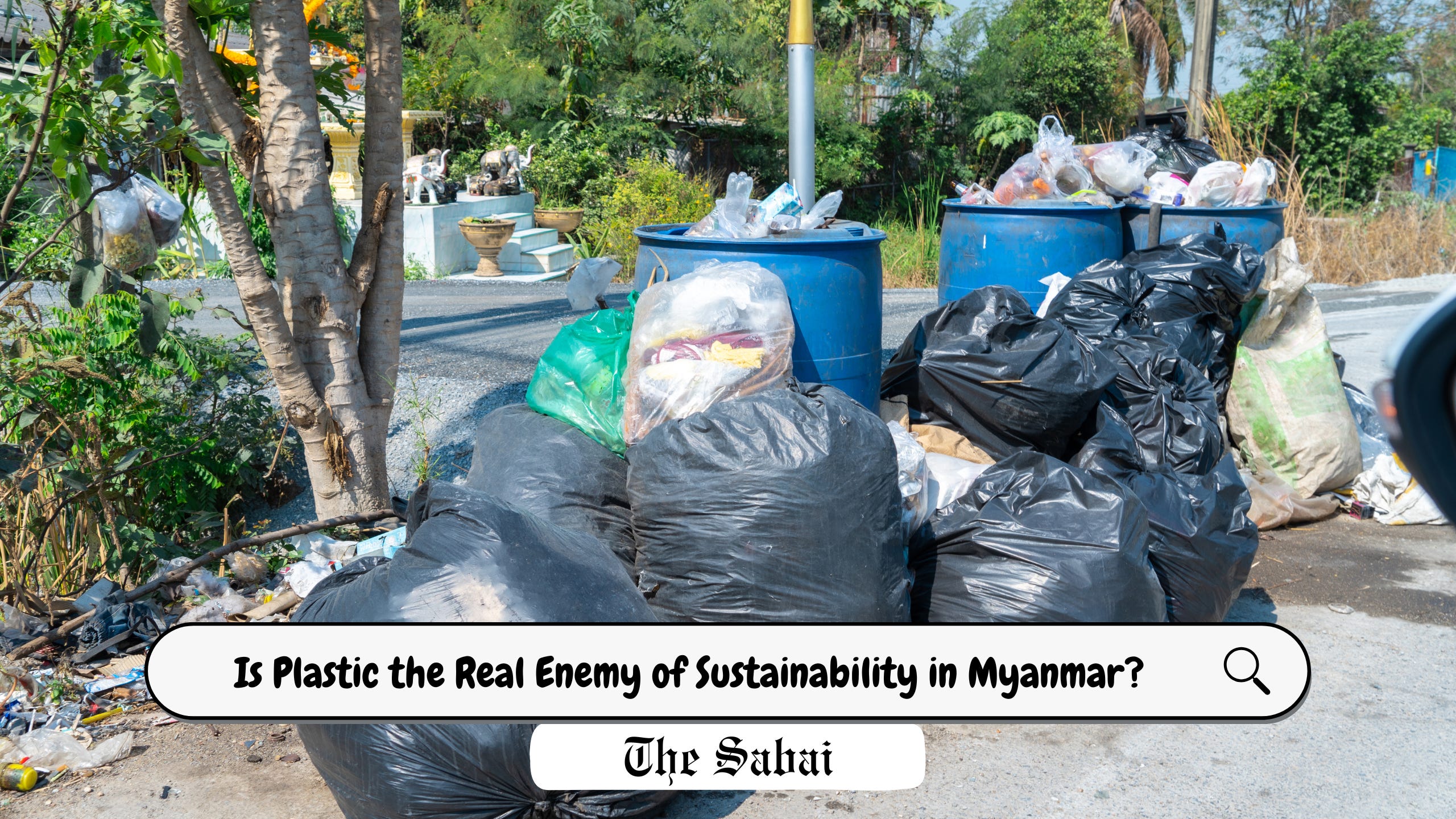
In Myanmar, one of the biggest sustainability challenges is plastic waste. Plastic bags are commonly used in markets and shops because they are cheap and convenient. However, many of these bags are used only once before being thrown away. Poor waste management and limited recycling systems allow plastic to accumulate in streets, rivers, and drainage systems, creating environmental and public health problems. Addressing this issue requires not only better policies but also changes in everyday habits and stronger community participation.Unlike high-income nations where waste is whisked away to unseen landfills or incinerators, Myanmar's waste infrastructure is intensely visible.
The infrastructure deficit in Myanmar’s waste management is structural. Municipal bodies like the Yangon City Development Committee (YCDC) and Mandalay City Development Committee (MCDC) collect thousands of tons of garbage daily, but their reach is largely confined to urban centers, and even there, resources are stretched thin. In suburban townships and rural villages, formalized trash collection is virtually non-existent.
Consequently, domestic waste follows a predictable, destructive lifecycle. It is either burned in backyard piles releasing toxic dioxins into the air or discarded into nearby creeks, roadside ditches, and drainage alleys.
During the dry season, these plastic-choked gutters sit silent. But when the monsoon hits, the consequences are immediate. The plastic acts as a watertight seal over municipal drainage networks. Streets transform into rivers within minutes of a downpour, ruining ground-floor businesses and creating stagnant pools where dengue-carrying mosquitoes breed.
Further downstream, the problem scales up. The Irrawaddy River, the nation’s economic and cultural lifeblood, is now cited by international researchers as one of the top twenty most plastic-polluted rivers in the world. The river acts as a conveyor belt, carrying hundreds of tons of macro and microplastics daily into the Andaman Sea, devastating marine ecosystems and threatening the coastal fisheries that millions rely on for protein.
Plastic pollution also has serious consequences for public health. When plastic waste is burned in open spaces, it releases harmful chemicals into the air that can contribute to respiratory diseases and other long-term health problems. In addition, tiny plastic particles, known as microplastics, can enter rivers, farmland, and the food chain. As people consume contaminated fish or drink polluted water, these particles may eventually affect human health. Therefore, reducing plastic pollution is not only an environmental issue but also an important investment in the well-being of Myanmar's people.
Historically, the knee-jerk reaction to environmental crises is to pass a law. Myanmar has tried this. Over the years, various regional governments have announced bans on the production and import of thin plastic bags. Fines have been threatened; occasional raids on wholesalers have made local headlines.
Yet, the bags remain. Why? Because top-down bans fail when there are no viable, affordable alternatives for the poorest segments of society. If a government bans a 5-kyat plastic bag but the closest biodegradable alternative costs 50 kyats, the policy is effectively a tax on the poor. In an economic climate weighed down by inflation and instability, expecting citizens to absorb environmental premiums is unrealistic.
True sustainability cannot be policed into existence; it has to be designed into the daily rhythm of communities.
If policies lack teeth, the solution must pivot toward localized, cultural levers. Myanmar actually possesses a deep historical precedent for sustainable packaging. Before the mid-1990s plastic boom, grocery shopping looked entirely different.
Fish and meat were wrapped in broad, waxy banana leaves tied with natural twine. Rice and dry goods were carried in woven bamboo baskets, and snacks were held in repurposed newspaper cones. While returning entirely to a pre-modern economy is impractical, modernizing these traditional practices offers a path forward.
Change is starting to spark from the ground up. In various neighborhoods, youth-led volunteer groups conduct weekly trash-collection drives, physically clearing blocked waterways. Social enterprises are popping up to turn collected plastic waste into construction materials, eco-bricks, or upcycled consumer goods.
Crucially, the informal sector holds the key to scalable recycling.
If municipal policies shifted away from punitive bans and toward supporting these informal networks perhaps by subsidizing the collection of low-value plastics like plastic bags we would see an immediate economic incentive for clean streets.
Navigating out of this plastic quagmire requires a psychological shift. It means moving away from the mindset that waste management is solely the government’s job, and moving toward a model of radical civic ownership.
For consumers, it means normalizing the small inconveniences: refusing a bag for an item that can be carried, keeping a reusable canvas tote in a motorbike seat, and separating organic waste from plastics at home. For local market committees, it means establishing centralized, cleanly managed disposal points so waste pickers can sort materials safely.
Myanmar’s plastic crisis is undeniable, but it is not irreversible. By marrying modern waste incentives with the country’s inherent traditions of community cooperation and natural resourcefulness, a cleaner, healthier, and genuinely sustainable future can be pulled from the margins back into the mainstream.
Thin Thin Aye is an undergraduate student from Myanmar with a strong interest in sustainability issues, particularly those affecting Myanmar.
“Advocating Sustainability, Shaping Our Future”
Help Sustain The Sabai - Myanmar’s Voice for Sustainability Support The Sabai