

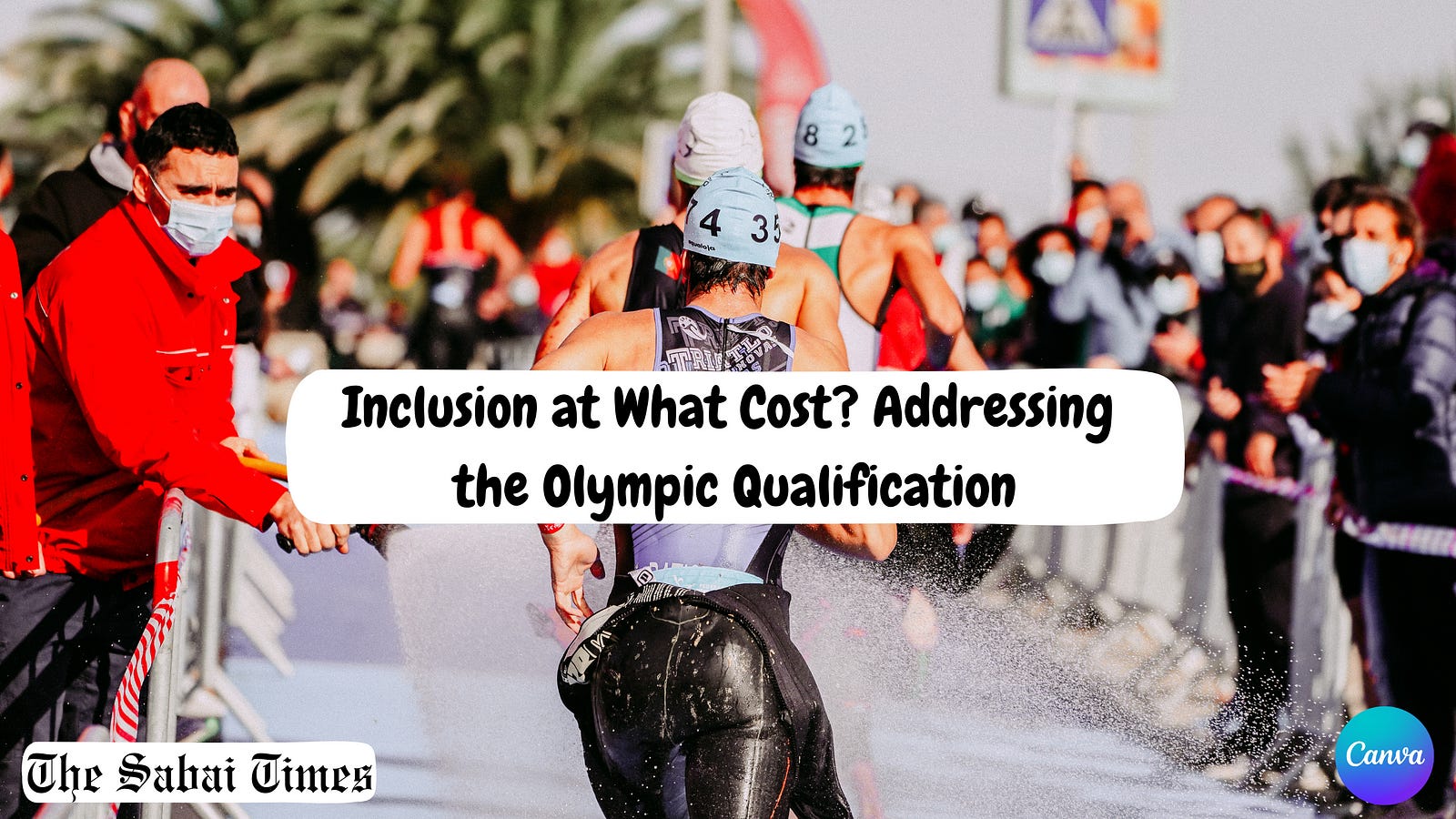
The IOC (International Olympic Committee) created the Universality System in the early 1990s, which began to be implemented at the Atlanta 1996 Olympic Games. This system seeks to include in the competition those countries that often face significant difficulties in qualifying athletes for the Games. While this practice has had positive effects on those who have benefited from the program, leading to proportional growth in sports development in countries such as Burundi, Guinea-Bissau, Comoros, Micronesia, and Vanuatu, these countries have been among those with the most representatives embraced by this inclusion. However, inclusion has had negative effects in sports where it is implemented and which, by their nature, do not have preliminary qualifying rounds, unlike athletics or swimming, where there are up to three elimination phases before reaching a semi-final.
In contrast, in sports such as road cycling, BMX Freestyle, and weightlifting, which are disciplines with a very limited number of spots due to there being only one round to award medals, the quality has declined due to the participation of those invited who do not possess the necessary conditions to face the challenge. Edition after edition, we see in weightlifting a final divided into two: the first where those invited struggle to stand out among themselves with lifts far below the standard, and another where a very small number of competitors, usually no more than five (less than half generally), compete for the medals. Similarly, in other sports like those mentioned earlier, we observe similar situations: contenders who quickly fall out of contention for any significant achievement, limiting the excitement of the medal race, knowing that only three will make it to the podium.
Beyond the spectacle that is diminished by those who find their opponents’ level difficult to match, we face a somewhat more unjust scenario: those athletes who have the marks, ranking, or experience to qualify but are unable to do so because these inclusion spots must be allocated. In recent competitions, we have even seen athletes with medals in previous editions unable to participate, such as Venezuelan Daniel Dhers, who won a silver medal at the Tokyo 2020 Olympic Games and is currently ranked 10th in the world in BMX Freestyle. Despite the final event in Paris 2024 featuring 12 athletes, only 8 spots were awarded based on ranking, as the other 4 were allocated for inclusion.
The IOC must expand the inclusion of those countries that, due to social or economic conditions, cannot prepare high-performance athletes, but it also needs to modify those competitions where they will be included, creating preliminary elimination rounds among them and thus possibly increasing the number of spots without affecting the meritocracy of those who are the best in their sports, nor the spectacle of the competition.
Yeisson Camacho is a Colombian Sports Trainer based in Portugal with extensive experience coaching various sports, including football, athletics, and chess. He has also been actively training high-performance athletes in disciplines such as boccia and wheelchair basketball.
“Advocating Sustainability, Shaping Our Future”
The opinions expressed in these articles do not represent the official stance of SRIc - Shwetaungthagathu Reform Initiative Centre. The Sabai Times is committed to publishing a range of perspectives that may not align with editorial policy.
Help Sustain The Sabai Times - Myanmar’s Voice for Sustainable Development Support The Sabai Times