


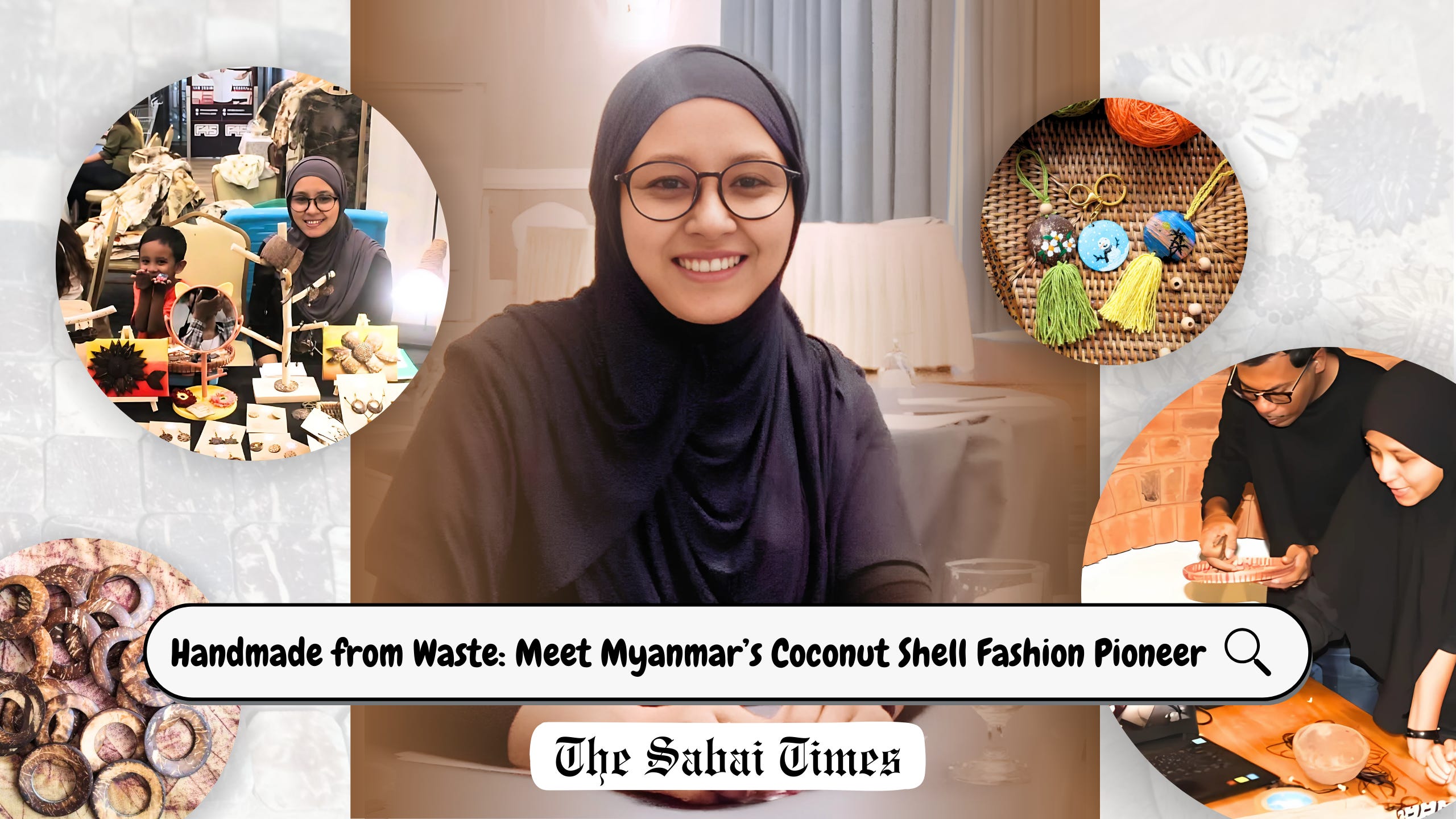
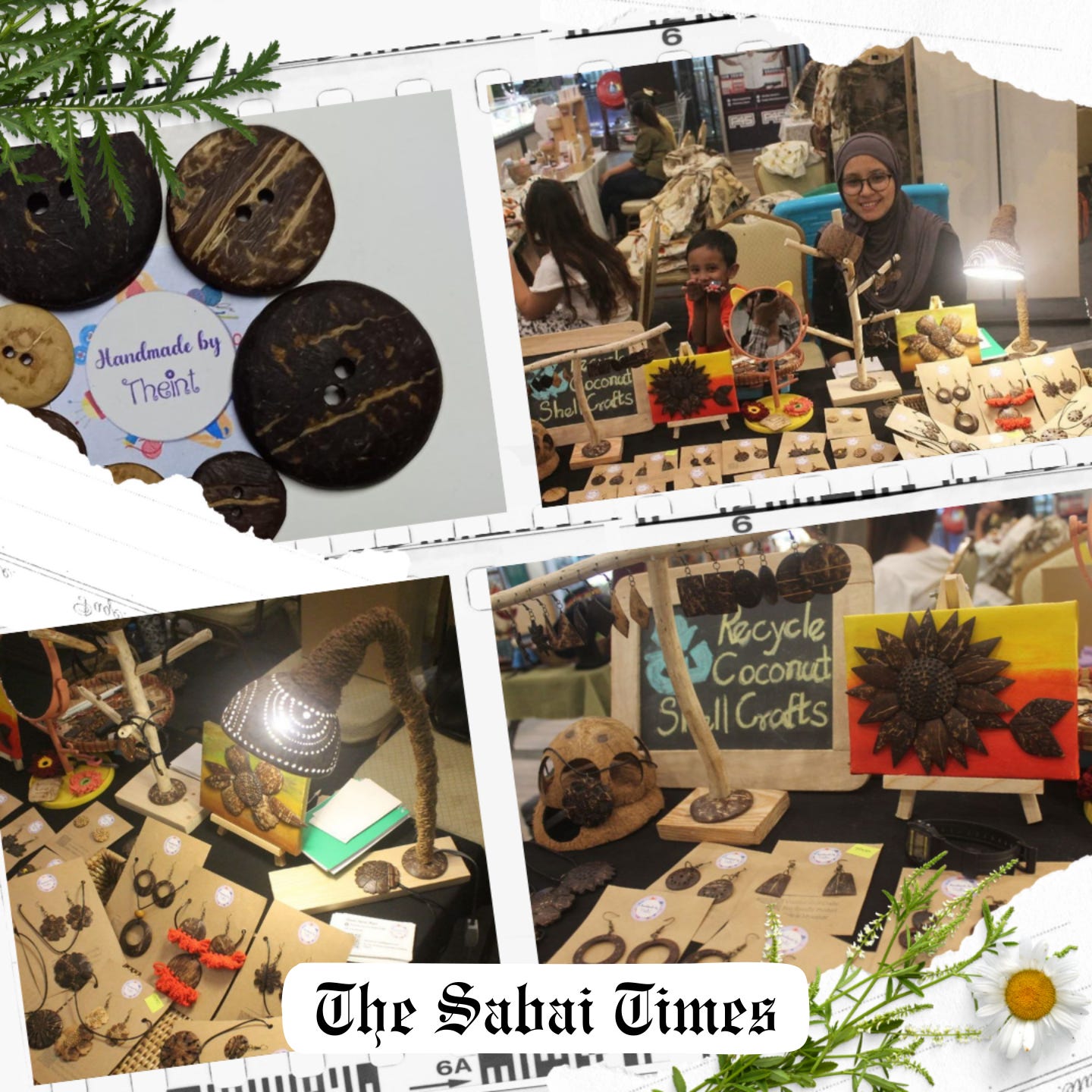
Have you ever wondered how discarded materials can be turned into something valuable and eco-friendly? Swan Yee Pyae from Shwetaungthagathu Reform Initiative Centre (SRIc) explores this question with Theint Theint Myat, a former researcher from the non-governmental field and founder of Handmade by Theint, a local social enterprise focused on creating handmade crochet items and buttons crafted from Upcycled coconut shells. Through her innovative use of coconut shells, she has created a unique line of handmade crochet buttons that promote sustainability and support a circular economy.
Swan Yee Pyae: How did you develop the idea for your business?
Theint Theint Myat: I often needed buttons when working on handmade crochet projects. Most of the available buttons were made from plastic or plastic compounds, which made me think about creating buttons from natural materials. But I didn’t know how to approach it initially.
One day, I came across coconut shells and realized they were perfect—natural, durable, and sustainable. That’s how I came up with the idea of creating buttons from coconut shells, free of plastic compounds.
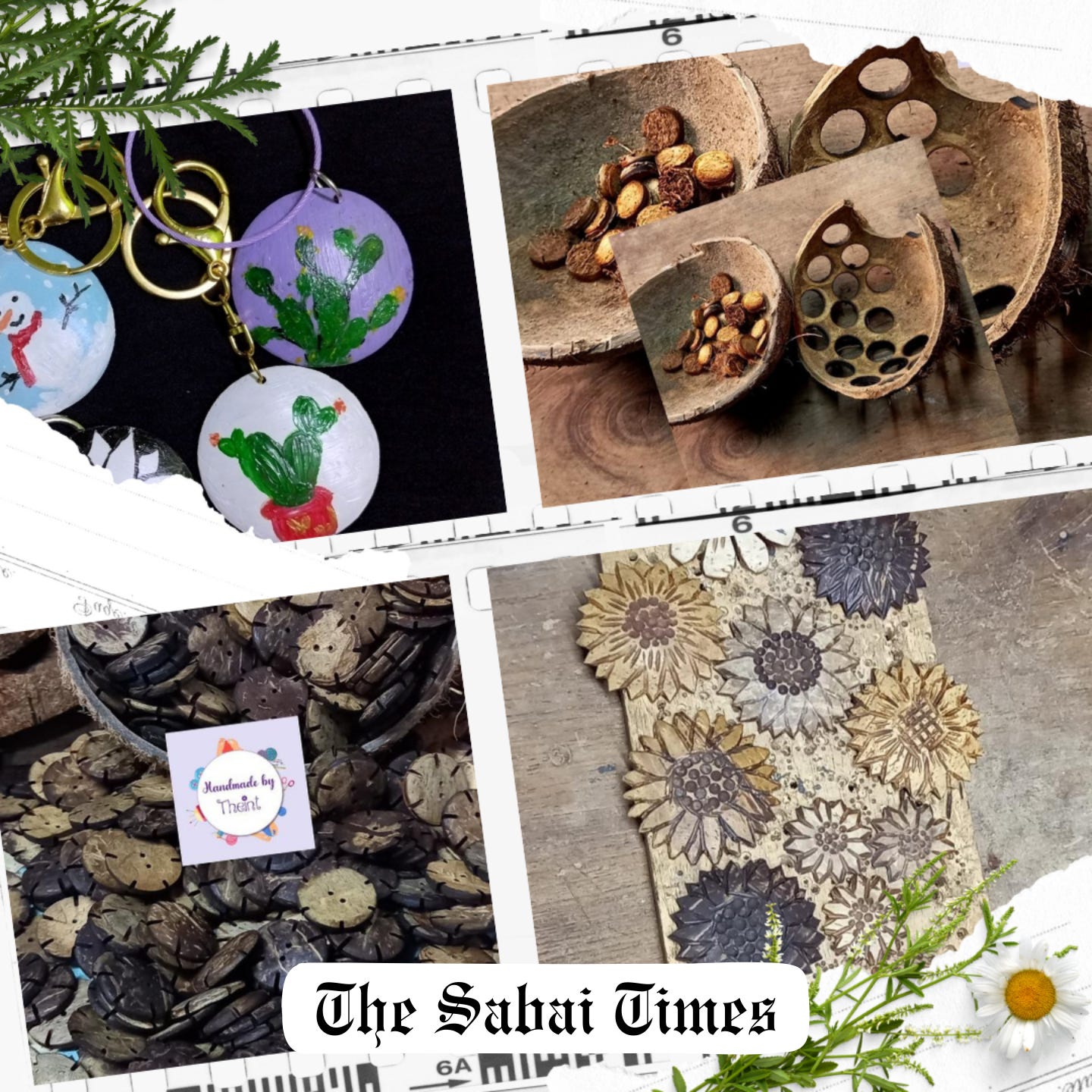
I’m also very thankful for my husband’s support. Although he isn’t a professional in this field, he’s passionate about mechanical and electrical work as a hobby. He often helped his friends and families with electrical devices. So when I shared my idea, he loved it and started finding ways. He worked on techniques like drilling holes into coconut shells, smoothing the surfaces, and decorating them.
However, the process wasn’t easy for us. It took us six to eight months of trial and error, countless failed attempts, and even some minor injuries before we successfully produced our first buttons from coconut shells. By October 2021, we could launch our products in the market.
Since then, we’ve been consistently improving. Comparing the products we made three years ago to today, the difference in quality is evident. Our techniques, materials, and overall craftsmanship have evolved significantly. We’re always striving to refine our products and improve quality.
Swan Yee Pyae: As far as I know, you previously worked as a researcher for an NGO. Where did you learn to make handmade products?
Theint Theint Myat: I’ve been sewing and making handmade objects since childhood.
Mommy was a tailor and taught me how to sew and make handmade products. During the summer holidays, I would spend time on the sewing machine, dreaming of becoming a designer. However, I had to abandon that dream since my family wasn’t financially stable.
Additionally, I wanted to travel a lot to learn more about diversity and culture. Thus, I worked hard to earn a career in research since I could not fulfill my primary dream.
My passion for creating handmade products is in my DNA, I guess. And I love handmade products, too. Whenever I traveled, I would look for local handmade items to wear.
After having my child, I saw an opportunity to revisit this passion. While caring for my child, I started creating my products during my free time. It felt like the right moment to turn my love for handmade items into a business.
Swan Yee Pyae: What are the significant obstacles you encounter in this business?
Theint Theint Myat: The main challenge we face is “electricity.” Power outages are very common in our country. This has been the biggest obstacle to running our business efficiently.
Another significant challenge is the shortage of workers. Since this is a handicraft business, only a few people with genuine interest and passion for this kind of work are willing to join us. Finding skilled and enthusiastic workers is extremely difficult.
Additionally, Myanmar's declining economy has made it harder for people to focus on sustainability. As the economy has turned down, most people prioritize putting food on the table rather than adopting eco-friendly practices. This mindset makes promoting sustainable products in the market even more challenging.
Swan Yee Pyae: As you mentioned, in an economy where putting food on the table is a primary focus, do you think sustainable fashion can succeed?
Theint Theint Myat: I aim to promote sustainable fashion within a circular economy, but our community lacks environmental sustainability awareness. Only a small, specific group of people actively engages with sustainable fashion. Developing a strong circular economy in Myanmar will take another five to six years.
Our society faces significant socio-political and economic challenges daily, making resilience essential for businesses like ours. Some people view handmade products, especially those made from waste materials like coconut shells, as trash. It takes time and effort to change this perception.
Another thing is: Fashion designers. They also play a crucial role in promoting sustainable fashion, but in Myanmar, very few designers focus on sustainability or zero-waste concepts. Most prefer working with high-end, expensive materials, making mainstream sustainable fashion harder.
Awareness is the most important factor. In our community, superstitions still take place as usual. For example, many see wearing thrifted clothes as shameful. They see it as a very disgraceful habit. That’s how our society is today.
Despite this, the concept of a circular economy has existed here for a long time through practices like sharing and thrift shopping, which are deeply ingrained in our culture. Since the vast majority of people are in poverty, the system of sharing and thrifting has existed long and well since I was a child.
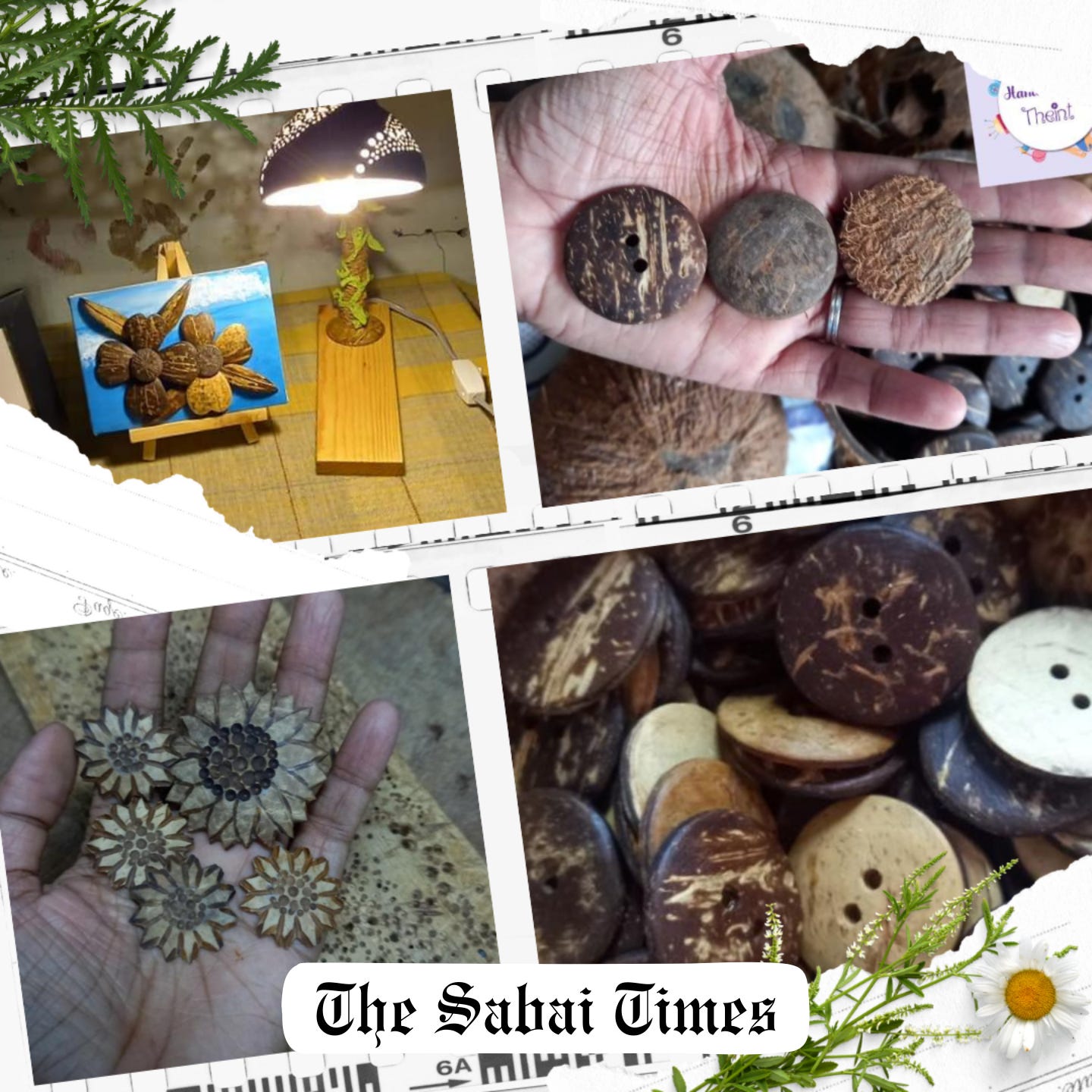
When I launched my products, one of our most complex challenges was to compete with plastic buttons. Many people prefer polished, mass-produced items over eco-friendly alternatives. However, I remain committed to building awareness and promoting sustainable practices.
Swan Yee Pyae: How do you market your business in this society that often overlooks sustainability?
Theint Theint Myat: My marketing approach is very simple. I focus on raising awareness rather than traditional advertising. That means I don’t promote my products by giving them to celebrities or influencers for attention.
Instead, I organize free workshops to share knowledge and create awareness about sustainability.
"Young people are particularly passionate about making handmade products. By sharing my experiences, I hope to inspire them to explore eco-friendly materials like bamboo or other natural resources. I aim to encourage others to embrace sustainability and make a difference.
My marketing idea is to spread awareness by arranging a workshop or sharing knowledge.
Swan Yee Pyae: How does your business contribute to reducing waste and promoting sustainability? What steps do you take to minimize the environmental impact of your products?
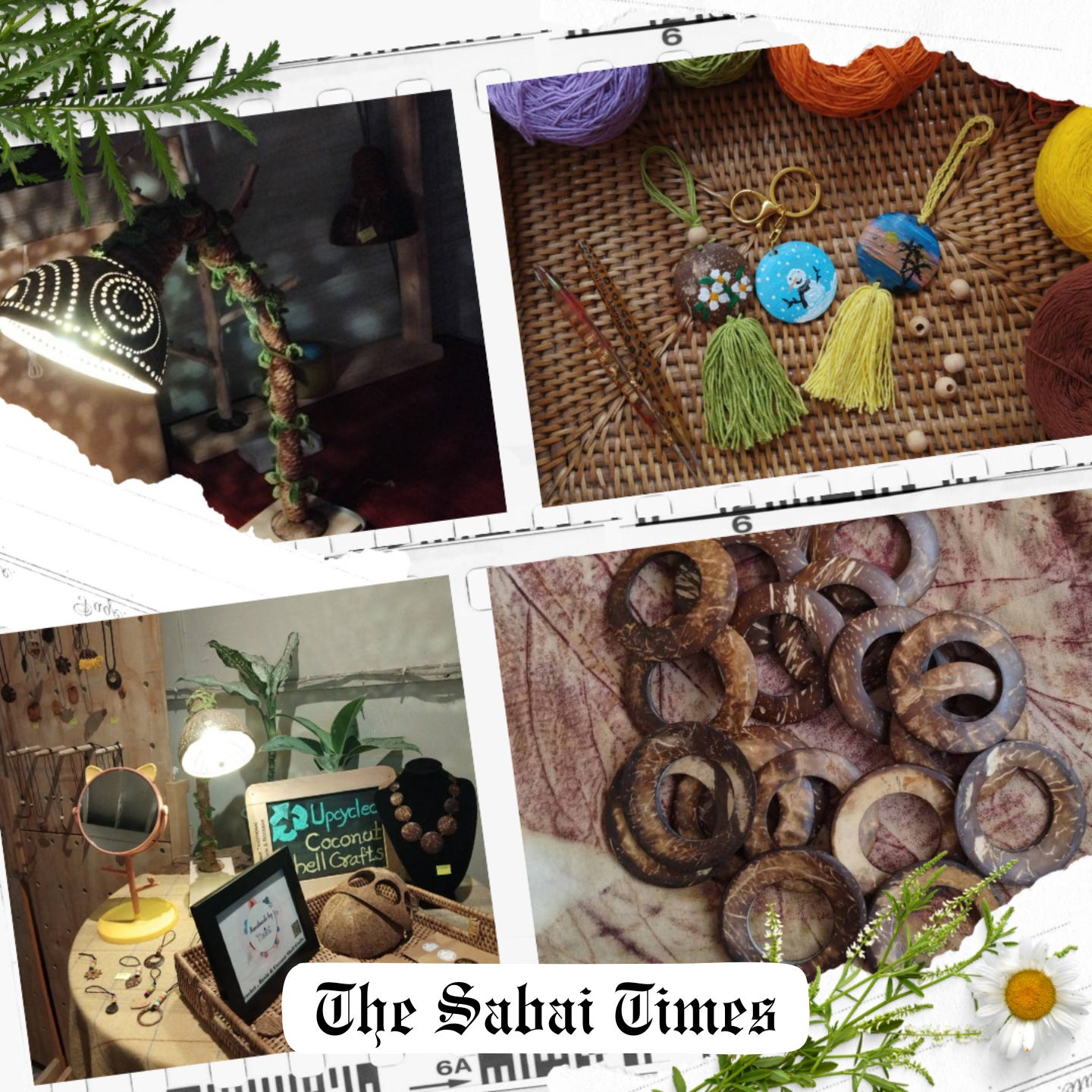
Theint Theint Myat: Our primary raw material is coconut shells, and our vision is to replace plastic compound buttons with sustainable, nature-based alternatives. In Myanmar, coconut shells are often considered as materials that are often discarded as waste. I believe we’re able to give these resources a second life.
In the past, coconut shells were thrown away and left unused. I started by collecting a few discarded shells and transforming them into handmade buttons and corsets. By doing so, I believe we’ve contributed significantly to reducing waste.
Over the past three years, one thing that stands out is how affordable our raw materials have been due to repurposing waste. This has been a key factor in keeping our business sustainable and thriving. Our efforts minimize environmental impact and demonstrate how waste can be turned into something valuable and beautiful.
Swan Yee Pyae: More and more people today are interested in making handmade products, especially for youths, focusing on sustainability. What advice would you give to them?
Theint Theint Myat: Since my business began with the goal of reducing plastic and promoting sustainability, I want more local small and medium enterprises (SMEs) to succeed in this space. But starting a sustainable handmade business is easier said than done. It’s best suited for those deeply passionate about their work and willing to pursue it without immediate financial returns.
My advice is simple: just start!
Turn your ideas into reality and share your results. Begin with small steps. You may encounter many difficulties, but you will also find a way to continue after starting.
The initial challenge is making money, I suppose. When I started, I made no profits for an entire year. Balancing my passion with financial realities was difficult. However, by the time I got halfway, I got the mindset that I could not give up since I got too far. So keep it up and develop resilience.
Money is often a concern, but it shouldn’t stop you from pursuing your goals. We'd lose so much creativity and innovation if everyone held back their ideas for these reasons. That’s very devastating.
So, my message is: Start Now!
Swan Yee Pyae is a Content Writer and Translator at the Shwetaungthagathu Reform Initiative Centre (SRIc). As a scholarship recipient at iCLA, Yamanashi Gakuin University in Japan, he is keenly interested in environmental sustainability and works at SRIc.
“Advocating Sustainability, Shaping Our Future”
Help Sustain The Sabai Times - Myanmar’s Voice for Sustainable Development Support The Sabai Times