


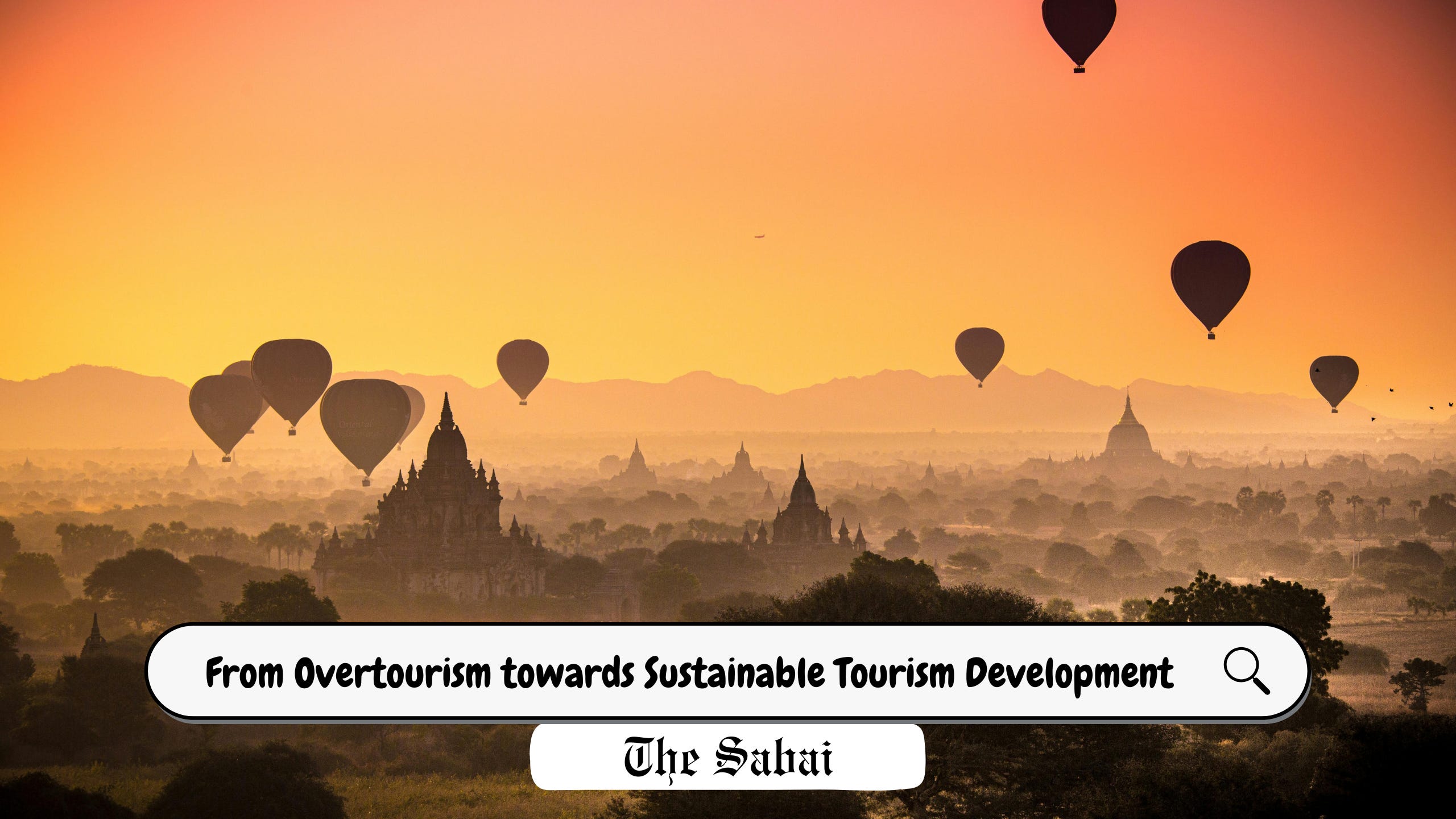
This article explores how overtourism can negatively affect destinations and explains how sustainable tourism strategies can balance economic growth with environmental protection and community well-being.
Key Takeaways:
Excessive tourist numbers can cause overcrowding, environmental degradation, rising living costs, pressure on infrastructure, and conflicts with local communities.
Examples from Maya Bay, Boracay, Japan, and European cities show that measures such as visitor limits, timed entry, regulation of accommodation, and spreading tourists to less-visited destinations can reduce pressure.
Long-term tourism development should balance economic, environmental, and socio-cultural needs, while involving local communities in tourism planning and decision-making.
Introduction
Tourism has become one of the world’s fastest-growing economic sectors, creating employment, stimulating investment, and supporting cultural exchange. Tourism is regarded as a major source of job opportunities and foreign income to the national economy according to the World Travel and Tourism Council (2024). According to the World Tourism Barometer of UN Tourism, international tourist arrivals reached 1.52 billion in 2025, increasing by 4% compared to the data in 2024.
Millions of people travel every year to experience different cultures, natural landscapes, historical monuments, and local traditions. While tourism brings significant economic and social benefits, its rapid expansion has created serious challenges. One of the most popular issues about tourism in most countries is overtourism.
What is Overtourism?
Overtourism means the excessive concentration of tourists in a destination beyond its environmental, social, cultural, or infrastructural carrying capacity. When the number of visitors becomes too high, the life quality of local communities declines, and the travel experience for tourists deteriorates. Vagena, A. (2021) described overtourism as not new, as an issue of excessive tourist concentration affecting local communities and the environment. As a consequence, congested streets, long queues, environmental degradation, rising living costs, and conflicts between residents and visitors pose a threat to the destinations.
Why Overtourism happens
Several factors contribute to the emergence of overtourism. One major cause of overtourism is the increasing popularity of destinations through social media, travel blogs, films, and online marketing. Once a destination becomes popular and gains recognition, visitor numbers rise rapidly within a short period.
Another contributing factor is the marketing strategies and attracting many tourists rather than focusing on tourism quality and sustainability. Budget airlines, affordable accommodation, and discounted travel packages have made travel accessible for more people and led to mass tourism at destinations.
Poor tourism and weak governance can further worsen the problem. Inadequate regulations, ineffective visitor management, and limited investment in conservation make it difficult for destinations to cope with increasing tourist arrivals.
Lessons learnt from international experiences of overtourism
Many famous tourist destinations have experienced the consequences of overtourism and found out the solutions to address this issue.
In Europe, cities such as Amsterdam, Barcelona, and Venice have experienced severe overcrowding due to continuously increasing visitor arrivals. Local governments have responded by regulating short-term accommodations, managing tourist flows, and encouraging tourists to visit less crowded destinations.
Another example is Maya Bay in Thailand. After filming the movie “The Beach”, this beach attracted an overwhelming number of tourists. To restore the damaged coral reefs and marine ecosystems, authorities temporarily closed the beach to return to normal under stricter visitor management policies. Similarly, Boracay Island in the Philippines experienced serious environmental degradation after tourist arrivals exceeded two million annually. Poor waste management, irresponsible tourist behavior, and inadequate environmental controls polluted the island’s beaches and coastal waters. Therefore, the Philippine government temporarily closed the island for environmental rehabilitation by improving waste management systems and promoting responsible tourism practices.
In the Japanese context, overtourism is often referred to as kankō kōgai (観光公害), literally meaning “tourism pollution”. In 2024, Japan received nearly 40 million inbound visitors, surpassing the arrivals before the COVID-19 pandemic in 2019. Tourism remains heavily concentrated, with about 73% of overnight in major five places such as Tokyo, Osaka, Kyoto, Hokkaido, and Fukuoka (World Economic Forum, 2025). At present, the Japanese government is trying to spread the concentrated number of visitors to lesser-known destinations.
Towards Sustainable Tourism Development
According to Cambridge Dictionary (2020), “sustainability generally refers to the quality of causing little or no damage to the environment and therefore able to continue for a long time.” From an environmental perspective, it highlights the situation of positive impact on the environment rather than negative impact, ensuring long-term continuity and resource preservation.
The World Commission on Environment and Development mostly referred to the Brundtland Commission (1987) defined sustainable development as “a form of development that meets the needs of current generations without compromising the ability of future generations to meet their own needs”. Weaver (2006) defined “Sustainable tourism is tourism that is economically viable, environmentally responsible and socially equitable”. Similarly, the UNWTO (2005) emphasizes that sustainable tourism development requires a balanced combination of environmental, economic and socio-cultural dimensions to ensure its long-term viability.
Sustainable tourism development involves planning approaches that integrate economic, social, and environmental goals while protecting host communities, cultural heritage, and natural resources (UNWTO, 2005). The Triple Bottom Line (TBL) Theory emphasizes that sustainable development should achieve a balance among economic, socio-cultural, and environmental dimensions, commonly known as “People, Planet, and Profit” (Weaver, 2006).
Strategies for Sustainable Tourism Management
As global tourism continues to expand, sustainable destination management has become increasingly important. Rather than limiting tourism, governments should adopt strategies that distribute visitors while protecting natural and cultural resources.
One effective approach is to diversify tourism products and destinations. Promoting lesser-known attractions reduces pressure on heavily visited sites while spreading tourism benefits across the country. Developing different types of tourism such as community-based tourism, ecotourism, cultural tourism, and rural tourism also creates new economic opportunities for local communities.
Visitor management is another essential strategy. Governments can introduce reservation systems, timed-entry tickets, visitor quotas, or seasonal pricing to regulate tourist numbers during peak periods. These measures can help maintain carrying capacity while improving visitor experiences.
Strong policy frameworks and effective legislation are equally important. Authorities should regularly review tourism regulations, monitor environmental impacts, enforce conservation measures, and encourage responsible business practices. Tourism planning should integrate environmental protection, infrastructure development and community participation.
Most importantly, local communities should actively participate in tourism planning and decision-making. If residents are aware of the impacts of overtourism and have knowledge about their environment and culture, they are more likely to support sustainable tourism development. Therefore, providing awareness and educational programs for residents plays a crucial role in promoting sustainability.
Conclusion
Overtourism has become one of the most significant challenges facing the world. Although tourism is an economic driver, uncontrolled visitor growth can damage destinations, reduce residents’ quality of life, and weaken the tourism experience. Experiences from countries such as Thailand, the Philippines, Japan, and some European countries demonstrate that effective planning, community participation, environmental protection, and responsible visitor management are essential for sustainable tourism development.
References
Cambridge Dictionary. (2020). Sustainability. In Cambridge Dictionary. Retrieved June 25, 2026, from https://dictionary.cambridge.org/dictionary/english/sustainability
Muller, N., & King, N. (2021). Thailand’s plans to manage tourism at Maya Bay. Deutsche Welle. https://www.dw.com/en/thailand-saving-a-beach-paradise-from-mass-tourism/a-57230396
Noble, R. (2025). Overtourism in Japan: How bad is it? Japan Travel. Retrieved July 20, 2026, from https://en.japantravel.com/tokyo/overtourism-in-japan-how-bad-is-it/72026
United Nations World Tourism Organization. (2018). ‘Overtourism’? Understanding and managing urban tourism growth beyond perceptions. https://www.e-unwto.org/doi/pdf/10.18111/9789284420070
Vagena, A. (2021). Overtourism: Definition and impact. Academia Letters, Article 1207. https://doi.org/10.20935/AL1207
Varga, P. (2019). Overtourism: Lessons from Boracay Island, the Philippines. EHL Insights. Retrieved July 22, 2026, from https://insights.ehl.edu/overtourism-borocay-island-philippines
Weaver, D. (2013). Sustainable tourism: Theory and practice. Routledge.
World Commission on Environment and Development. (1987). Our common future. Oxford University Press. https://sustainabledevelopment.un.org/content/documents/5987our-common-future.pdf
World Economic Forum. (2025). How Japan is redesigning tourism to benefit local communities. Retrieved July 20, 2026, from https://www.weforum.org/stories/2025/05/how-japan-is-redesigning-tourism-to-benefit-local-communities/
World Travel & Tourism Council. (n.d.). Travel & tourism economic impact 2025: Global trends. WTTC Research Hub. https://researchhub.wttc.org/product/travel-tourism-economic-impact-2025-global-trends
Hnin Lei Wai is currently pursuing a Master’s degree in International Cooperation (Tourism and Hospitality) at Ritsumeikan Asia Pacific University in Japan.
“Advocating Sustainability, Shaping Our Future”
Help Sustain The Sabai - Myanmar’s Voice for Sustainability. Support The Sabai