


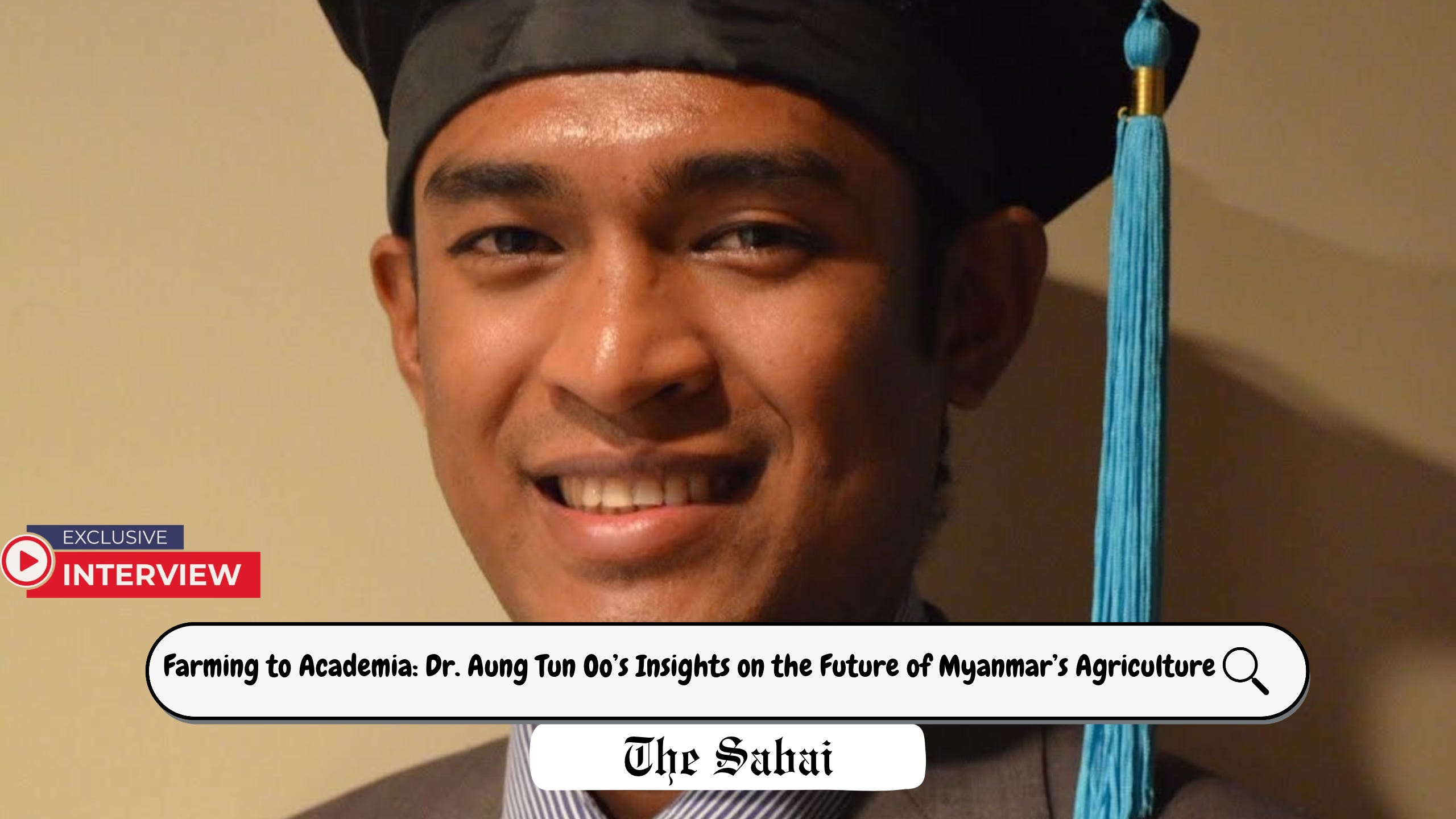
In this Sabai interview, Dr. Aung Tun Oo shares his path from a village to European universities, what farmers have taught him, why adaptation is challenging without peace, and his advice to young people.
Who is He?
Dr. Aung Tun Oo is from a farming family in rural Myanmar. Currently, he is a Postdoctoral Research Fellow at the University of Urbino Carlo Bo in Italy, where he works as a research and agricultural scientist focusing on climate change, rural livelihoods, vulnerability, adaptation, and disaster risk. In addition, his PhD at Ghent University in Belgium examined how farm households in Myanmar are affected by, and adapt to, climate change. He also has experience working with the Food and Agriculture Organisation (FAO) in Myanmar. He has been a guest on The Sabai’s webinar series, including SRIc’s 2024 session on climate change and Myanmar’s future. In this interview, he explained his pathway from a rural area of Myanmar to European universities, his research on Climate Change and Myanmar agriculture, why adaptation is not enough without sustainable peace, and his advice to youth who are trying to achieve their goals.
From a farming family to Europe
Maw Byar Myar: Your academic journey has taken you from Myanmar to Europe. What first inspired you to focus on agriculture, rural livelihoods, and climate change?
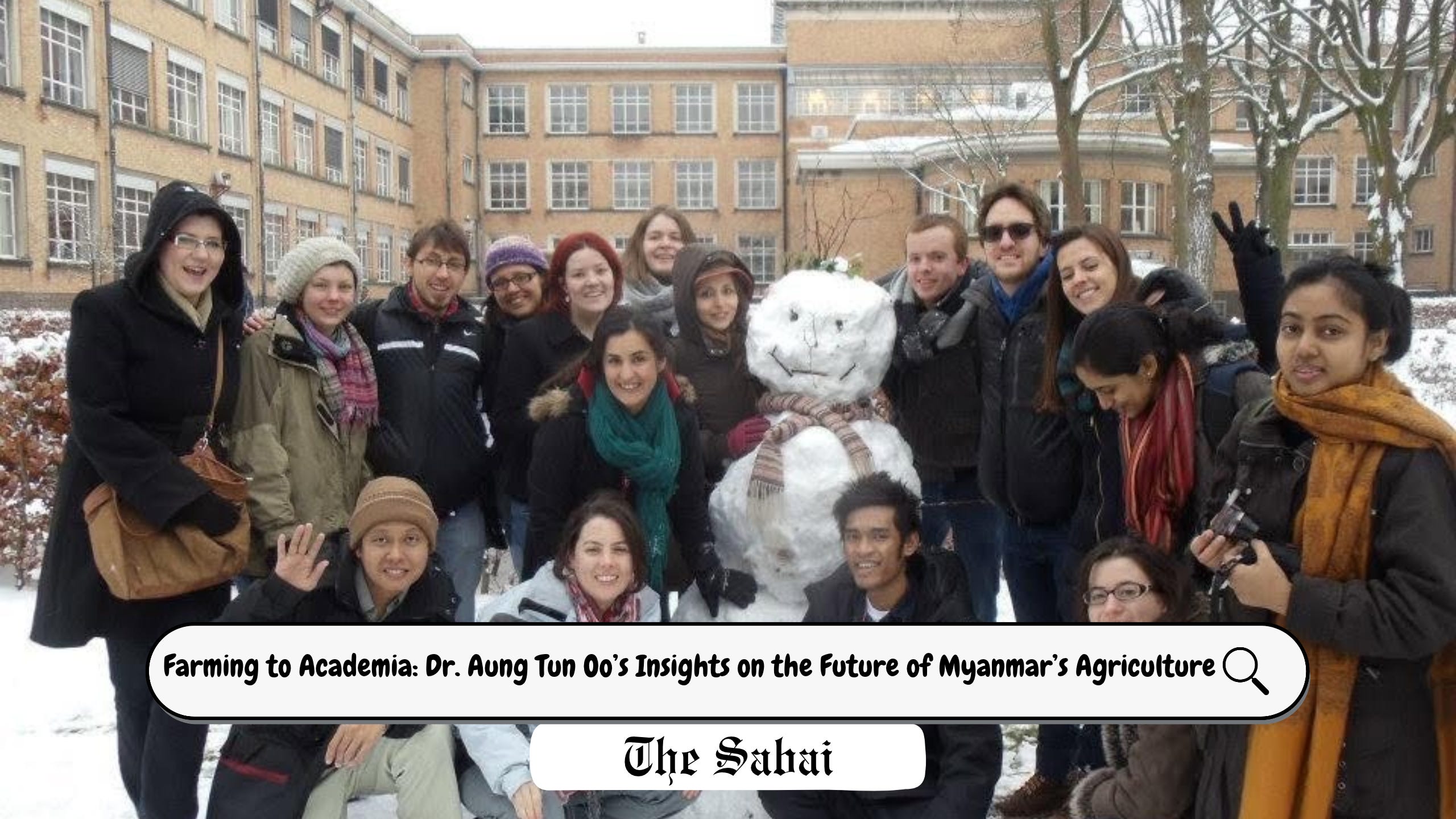
Dr. Aung Tun Oo: I was born and raised in rural areas of Myanmar, and my parents are farmers, so I have been familiar with farming and agriculture since childhood. After completing high school, I studied at Yezin Agriculture University in Myanmar. Later, I came to see agriculture as the foundation of development for a country like Myanmar. After graduation, I went to Israel, where I could learn agricultural practice while working. I found many opportunities and scholarships to study in international universities, which motivated me to continue my education. Therefore, after returning to Myanmar, I applied for the Erasmus scholarship to study in Europe in 2012, and finally I received a scholarship in Belgium. I completed my master’s degree in 2014 and continued to my PhD with a scholarship. After that, I worked with FAO in Myanmar, and now I am pursuing postdoctoral research in Italy. To conclude, what inspired me to continue my journey was my background: I come from a farming family in a rural area.
What farmers experience
Dr. Aung Tun Oo: Today, Myanmar is facing one of the most serious climate crises in the Asia region. During my PhD, we collected and analysed data, and it showed that due to climate change and the crisis, farmers are among those most affected in their daily lives. We also studied how Myanmar farmers adapt and cope with the climate crisis. In central parts of Myanmar, farmers are facing abnormal rainfall and drought. In the Ayeyarwady region, particularly, seawater and salinity are encroaching on agricultural land while insect pests are also increasing that affects the productivity. Currently, farmers are adapting by changing their farming practices, the crops they grow, and conserving water. However, at the national level, the challenge is far greater. It needs more resources, support, and coordinated actions from the government, NGOs, and farmers themselves, including agricultural education and technological support. Through our research, we suggested such measures and continued implementation by all sectors.
What helps a household adapt
Dr. Aung Tun Oo: According to the definition of the Intergovernmental Panel on Climate Change (IPCC), we need to examine vulnerability via three components. First, the exposure to the effects of climate change, sensitivity that shows why people are affected and last, adaptive capacity including coping capacity. Among them, adaptive capacity is the one we can easily influence and take action. When farmers can adapt, they can reduce the impact of climate change. Therefore, strengthening the capacity of farmers requires technological and other forms of support for farmers. Moreover, migration is another factor we have to consider: when households cannot build adaptive capacity and there are no family members to continue, labor becomes scarcer that leads to rising costs for wages. Therefore, the Ministry of Agriculture, the Department of Fisheries, the Department of Agriculture, the Environmental Conservation Department, and the Department of Meteorology and Hydrology need to collaborate in supporting farmers’ education about weather conditions, agricultural technology, what to cultivate, and what should be avoided. However, the difficulty here is that the connections between departments and ministries in Myanmar are weak that make them work independently. To solve this issue, the departments and ministries should cooperate and provide technological and knowledge support to farmers, working with farmers’ unions, rural development departments, CSOs and NGOs, on productivity, trade and fertilisers. What we usually see is corruption within the system, from the local and township levels to the district levels, that should be addressed. When we are willing to promote our country’s agriculture, we must support farmers together as well.
Gender and vulnerability
Dr. Aung Tun Oo: In Myanmar, most legal holders of farmland are men, and a few women own it. When accessing government loans, men also tend to hold more power, and they often take jobs that require physical strength. Currently, due to the economic crisis, many international companies have left that country, and large numbers of women who are working in the garment industry have lost their jobs. The economic situation has deteriorated severely, and it left women unemployed. In the agricultural field, women can do farming and harvesting. However, due to the current crisis, farm owners could not afford to hire labour; even when they hire, they tend to hire men who are perceived as stronger. Therefore, women are strongly affected again in this situation and less likely to be hired due to their household responsibilities. What I want to suggest is that international research should assess gender and the differences in sensitivity to climate change and agriculture between men and women.
Climate change in a country of many crises
Dr. Aung Tun Oo: Currently, Myanmar is facing a polycrisis from many factors. Since 1948, after gaining independence from the colonial government, conflict has persisted across the country. Now, after the 2021 military coup, civil war has brought displacement, inflation, and economic crisis alongside the COVID-19 pandemic. For most farmers, farming and agriculture are now a means of survival rather than a business, since most holders are smallholders with fewer than five acres. In addition, the country imports heavily and exports little. Due to the United States invasion of Iran and the Iran-United States crisis, fuel prices have risen. Therefore, even when the farmers are advised to use natural fertiliser, it is still difficult for them. Personally, government intervention is needed, but due to the current civil war, it is difficult and ineffective. Nowadays, about one-third of the population is not able to afford to buy the food they used to before. If this crisis continues, poverty and hunger may affect almost half of the population in Myanmar. Honestly, farmers have the capacity and ability to build and are rich in knowledge since they have been farming for a long time. But they lack support from the system. To withstand the economic pressure and overcome these climate-related hazards such as flooding, peace is needed.
Difference between Myanmar and Italy
Maw Byar Myar: What similarities and differences have you seen between farmers in Myanmar and in Italy?
Dr. Aung Tun Oo: This is incomparable since the gap is very large. In Italy, basic services such as electricity are available for 24 hours, roads for transportation are good and they have advanced technology and industry. On the other hand, in Myanmar, delivery processes are mostly affected and ineffective due to corruption and a lack of basic foundations such as technology, transportation, and electricity. In terms of farmers, personally, Italian farmers are well off and are able to buy supplies, hire labour, and utilize technology. In Myanmar, many farmers still have to rely on themselves to operate and have difficulty hiring labour and buying supplies. When we look at prices, Italy also has standard prices for products that are fixed and regulated by the government, whereas Myanmar farmers are taking out loans for farming every year and face financial barriers.
From research to the communities most at risk
Dr. Aung Tun Oo: Using the data from the Myanmar Information Management Unit (MIMU), we combine it with population data, conflict-affected data, and socioeconomic data to examine which areas are most affected. Then, we found out that townships in conflict-affected regions such as Rakhine, Kachin and Chin states have higher disaster risks. These are rural regions of Myanmar where many ethnicities are settling down. Therefore, in terms of rural development, these factors have to be taken into account. However, the government is now paying little attention to these areas. Our research highlights and recommends that International organisations like the United Nations and the World Food Programme help deliver assistance and aid to conflict-affected zones through negotiation for peace and ceasefires. In addition, with our research, we are providing solutions for policymakers to address these issues. Ultimately, the government and the international and local organisations have to work together to achieve development.
I returned to Myanmar after completing my PhD and contributed my expertise by carrying out projects in Yangon, Rakhine, and Ayeyawwaddy regions. One of the projects that I worked on included a fisheries project. In this project, we combined our knowledge and slides from our research with the requirements of the project team. Personally, it went well, and some elements were successfully achieved. However, when we found out that there were some weaknesses that should be changed, we requested reforms. Honestly, the system and the people who work in the system were reluctant to change due to a lack of incentives for personal benefits, the top-down structure of the government, and corruption in the system.
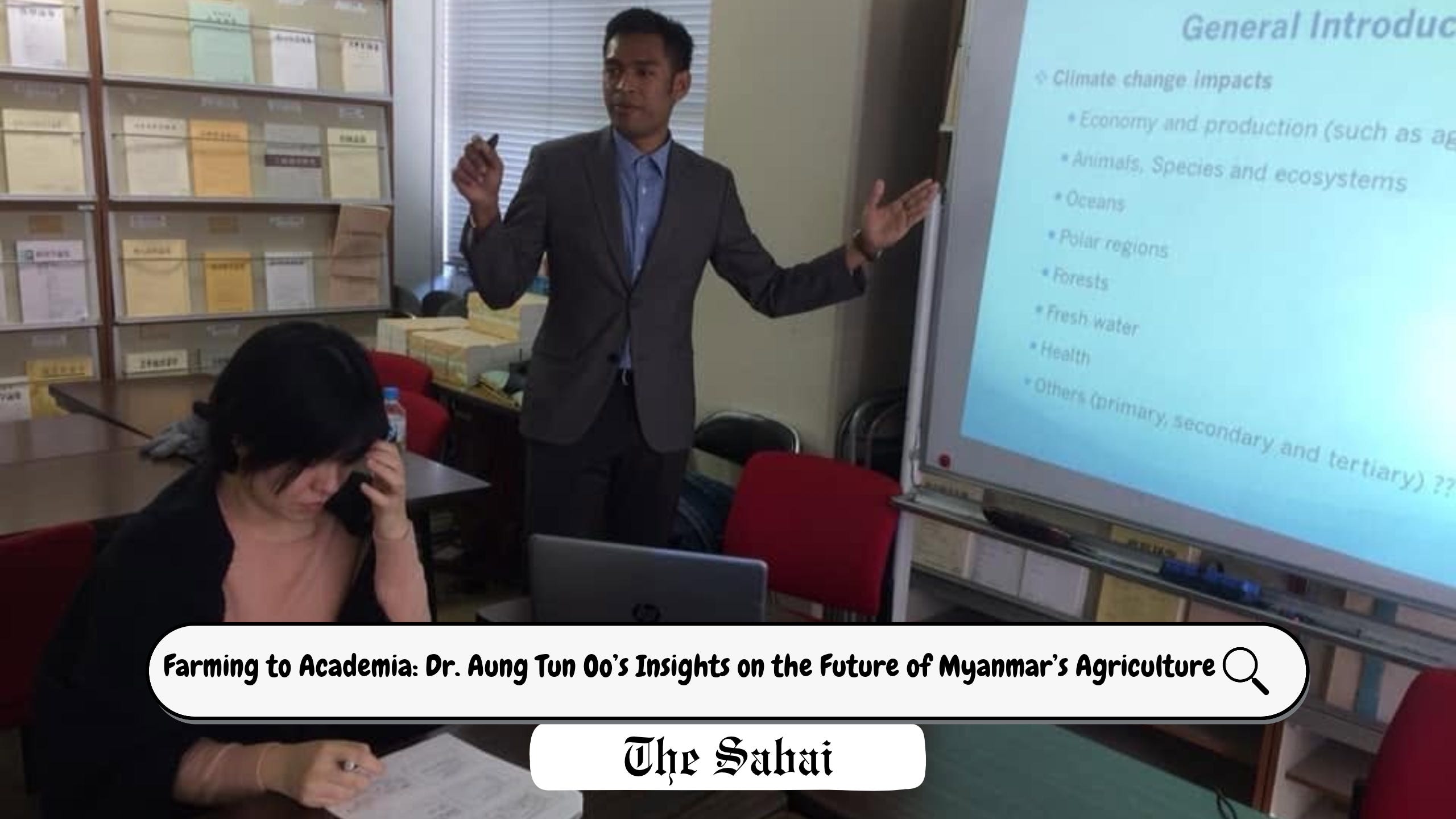
Therefore, we later decided to share the useful information via a mobile application at that time, so that the information could reach those who could afford mobile phones. Nowadays, many people can access mobile devices and digital technology, yet the government staff and system in Myanmar still follow the structures that were established many years ago and work strictly by the book. Personally, they could use GIS and AI technology to address climate change and adaptation more easily. We encouraged the government to adopt practical and advanced technology by modernizing the system. What is needed to change or reform a policy is that we no longer need heavy and time-consuming paperwork when we advance and adopt technology, which can reduce the workload a lot. I suggest the government learn from neighbouring countries like Thailand as well in terms of technology.
Advice for young people
Dr. Aung Tun Oo: Looking back, I was able to study agriculture in depth through my research, which led me to find many opportunities. I believe that having experience is essential. I suggest young people find opportunities and experience, not only to graduate from university, but also to learn more and to understand more in their specific areas. This will lead to further opportunities. Therefore, I want to say that to gain as much experience and responsibility as you can, continue doing what you truly enjoy with determination. Then, when an opportunity comes, grasp it.
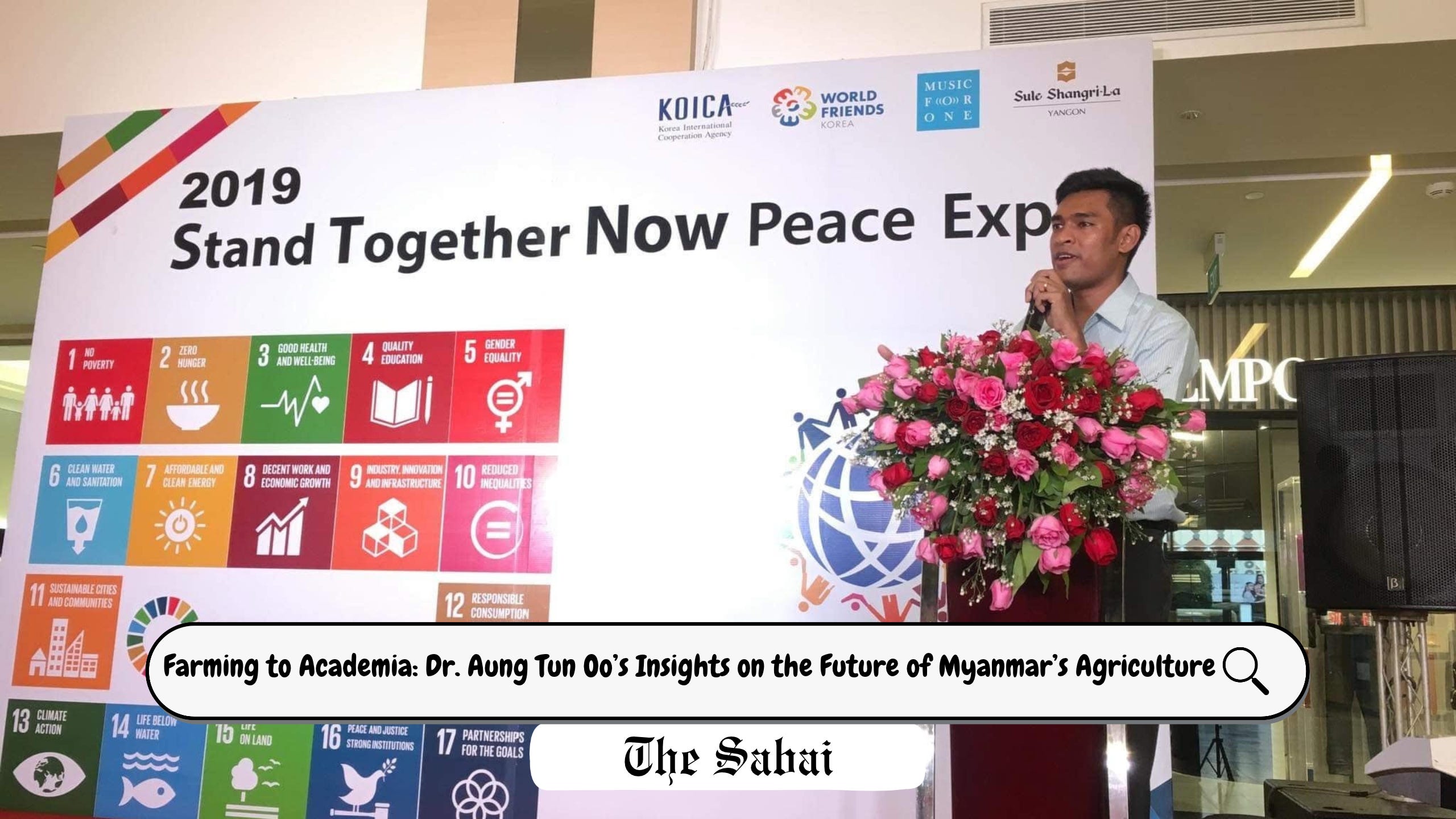
Looking ahead, around seventy percent of the population in Myanmar are from rural areas, and now everyone is facing hardships. From my perspective, Myanmar is able to achieve sustainability when peace is secured. Also, we need the right people in the right positions. However, looking at the current situation, Myanmar has high dropout rates in education, weak healthcare system and SDG 13, climate action, is still weak that makes the country remain underdeveloped within the ASEAN region. Not only research, but actions are also needed on many fronts. I now see some innovation in Yangon organised by youth and they are doing recycling products. We should keep pace with new trends. Education and healthcare must be prioritised. I would like to say that if the country is at peace, economic development is possible. In the last 16 years, between 2010 and 2020, we saw many foreign investments come to Myanmar since it was peaceful and they saw that Myanmar could have a sustainable future. Now, even though there are insecurities and a lack of peace, we must find the right path towards achieving our goals and development.
Maw Byar Myar is a Research Assistant at the Shwetaungthagathu Reform Initiative Centre and is currently pursuing a Bachelor of Social Policy and Development at Thammasat University, Thailand.
“Advocating Sustainability, Shaping Our Future”
Help Sustain The Sabai - Myanmar’s Voice for Sustainability. Support The Sabai