

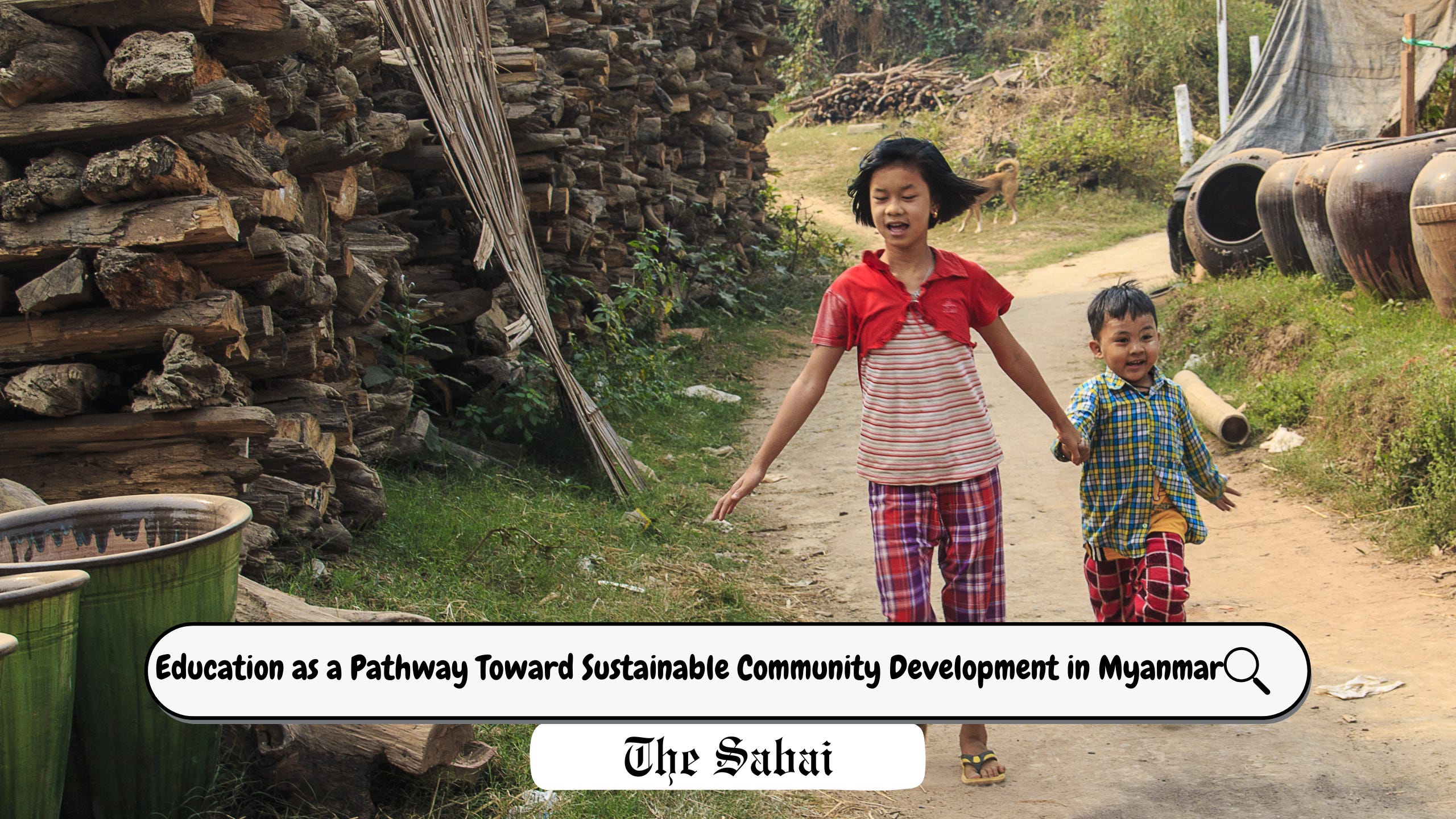
Education is one of the most important foundations for sustainable community development. It is not only a process of acquiring knowledge but also a way to empower individuals, strengthen communities, and create opportunities for future generations. Sustainable development requires inclusive societies where people have the skills, confidence, and ability to participate in decision-making and contribute to positive change.
The United Nations Sustainable Development Goals recognize quality education as a key factor for achieving sustainable development. Sustainable Development Goal 4 emphasizes the importance of ensuring inclusive and equitable quality education and promoting lifelong learning opportunities for all (United Nations, 2015). In Myanmar, education has a particularly important role because communities continue to experience social, economic, and political challenges that affect learning opportunities.
Despite these difficulties, education remains a pathway toward building resilient communities. By improving access to quality education, empowering young people, and promoting equal opportunities, Myanmar can strengthen its human resources and create a more sustainable future.
The Importance of Education for Community Development
Education contributes significantly to community development by improving people’s knowledge, skills, and ability to participate in society. Educated individuals are more likely to find employment opportunities, contribute to local development, and participate in solving community challenges. According to UNESCO (2021), education plays a central role in reducing inequalities and supporting sustainable development by developing individuals’ capabilities.
However, many communities in Myanmar face barriers to education. Rural areas, conflict-affected regions, and marginalized communities often experience limited access to learning resources, trained teachers, and educational facilities. Economic difficulties and social challenges can also prevent children and young people from continuing their education.
These barriers not only affect individuals, but they also influence the long-term development of communities. When young people lose educational opportunities, communities lose potential future leaders, professionals, and contributors. Therefore, supporting education is an investment in both individuals and society.
Education During Challenging Times in Myanmar
Myanmar has experienced significant social and political challenges that have affected many aspects of life, including education. In some areas, students and teachers face difficulties due to instability, displacement, and limited resources. During such circumstances, maintaining education opportunities becomes essential for protecting the future of communities.
In some conflict-affected areas of Myanmar, the expression “one hand holding a gun and the other hand holding a book” reflects the idea that security and education are both important concerns during difficult times. While this expression comes from a conflict context, it also highlights a broader message that education should continue even when communities face uncertainty.
Education during challenging periods provides more than academic learning. It helps individuals develop critical thinking, resilience, and problem-solving skills. UNICEF (2023) emphasises that education in emergencies can provide stability, protection, and hope for children and young people affected by crises.
Therefore, maintaining access to education is not only about continuing classes. It is also about supporting communities to remain strong and preparing future generations to contribute to rebuilding and development.
Education and Youth Empowerment
Young people are important actors in sustainable community development. Through education, youth can develop leadership skills, confidence, and the ability to participate actively in society. Supporting youth education creates opportunities for young people to become responsible citizens and future community leaders.
My experience as a Teaching Assistant at Young Ni Federal School helped me understand the importance of education in personal development. Supporting classroom and online learning activities showed me that education is not only about academic knowledge but also about creating a supportive environment where students can build confidence, communication skills, and motivation.
In addition, my involvement in youth education activities through Youth Society for Education strengthened my understanding of how educational opportunities can encourage young people to engage with their communities. These experiences showed me that even small educational activities can create meaningful impacts on individuals and communities.
Education, Inclusion, and Equal Opportunities
Sustainable community development cannot be achieved without inclusion. Education should provide equal opportunities regardless of gender, ethnicity, social background, or location. Inclusive education helps reduce inequality and allows more people to contribute to society.
Gender equality is especially important in education. When girls and women have access to education, they gain greater opportunities to participate in economic activities, leadership roles, and decision-making processes. UNESCO (2020) highlights that inclusive education is essential for ensuring that all learners have opportunities to succeed.
In Myanmar, supporting equal access to education requires cooperation among communities, educational institutions, and development organizations. Programs should consider the different challenges faced by learners and create supportive environments where everyone can participate.
The Role of Community-Based Education
Community participation is essential for creating sustainable education systems. Schools and organizations alone cannot solve all educational challenges. Parents, teachers, local leaders, and young people must work together to identify problems and develop suitable solutions.
Community-based education approaches are effective because they consider local needs and encourage people to take ownership of development activities. Development organisations can support communities through training, resources, and capacity-building programs.
According to the United Nations Development Program (2022), sustainable development requires inclusive participation and cooperation among different groups. Education programs that involve communities are more likely to create long-term positive impacts.
Recommendations
To strengthen education as a pathway toward sustainable community development in Myanmar, several actions should be considered.
First, improving access to quality education should be a priority, especially for vulnerable and underserved communities. Investment in teachers, learning materials, and safe learning environments is necessary.
Second, education programs should focus on both academic knowledge and practical skills such as communication, leadership, and critical thinking. These skills help individuals contribute effectively to their communities.
Third, partnerships among communities, government institutions, and development organisations should be strengthened. Collaboration can create more effective and sustainable education initiatives.
Finally, young people should be encouraged to participate in community development activities. Empowering youth through education can help create future leaders who contribute to positive social change.
Conclusion
Education is a powerful pathway toward sustainable community development in Myanmar. It empowers individuals, strengthens communities, and creates opportunities for future generations. Although Myanmar faces many challenges, education remains an essential tool for building resilience, equality, and social progress. My experiences in education and youth engagement have shown me that education can create meaningful changes in people’s lives. By promoting inclusive education, supporting youth development, and encouraging community participation, Myanmar can move toward a more sustainable and resilient future.
References
UNESCO. (2020). Global education monitoring report 2020: Inclusion and education – All means all. UNESCO. https://www.unesco.org/gem-report/
UNESCO. (2021). Reimagining our futures together: A new social contract for education. UNESCO. https://unesdoc.unesco.org/
UNICEF. (2023). Education in emergencies. UNICEF. https://www.unicef.org/education
United Nations. (2015). Transforming our world: The 2030 agenda for sustainable development. United Nations. https://sdgs.un.org/2030agenda
United Nations Development Programme. (2022). Human development report 2021/2022: Uncertain times, unsettled lives. UNDP. https://hdr.undp.org/
Khin Phyo Thu is a Bachelor of Political Science graduate from Mai Ja Yang College and is currently working as a Digital Resources and Information Management Intern at Inya Institute.
“Advocating Sustainability, Shaping Our Future”
Help Sustain The Sabai - Myanmar’s Voice for Sustainability Support The Sabai