

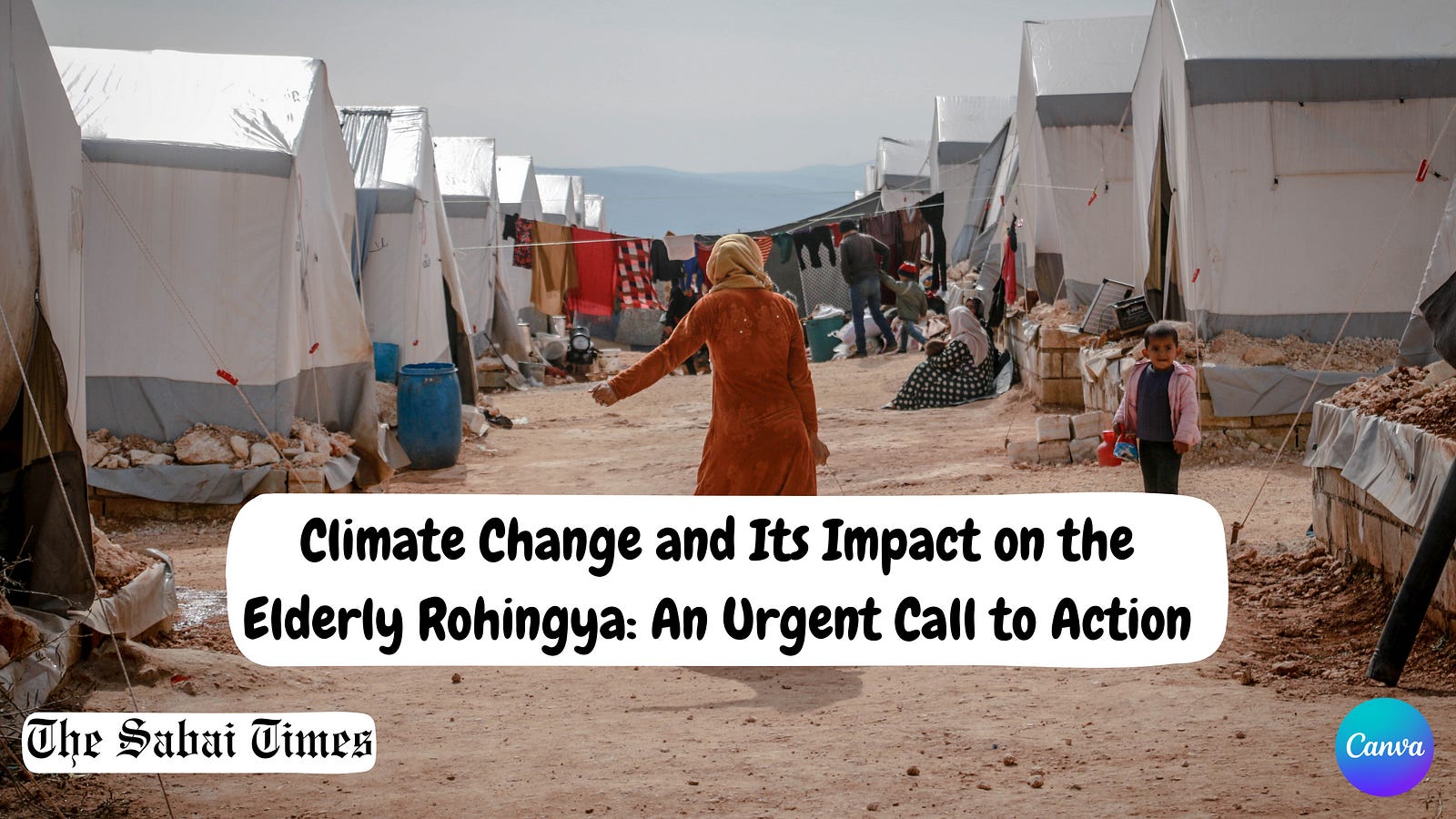
The Rohingya refugee camp in Cox’s Bazar, Bangladesh, was initially designed for 50,000 people. It shelters over 900,000 displaced individuals today, making it the largest refugee camp globally. Tragically, this camp, like many parts of Bangladesh, bears the brunt of climate change. It faces rising sea levels, cyclones, and extreme weather conditions. Among those most affected are the elderly Rohingya residents, who are now raising their voices to draw attention to the dire consequences of climate change for their already vulnerable community.
Recognizing the Signs
The Rohingya camp, in a vulnerable low-lying area, faces persistent flooding during monsoons. An elderly resident recalls, “Weather used to be our friend, but now it brings suffering with floods, droughts, and rising temperatures.” These climate change signs pose long-term threats, risking the camp’s habitability and potential relocation for the community.
Impacts on the Elderly
Elderly Rohingya camp residents face heightened vulnerability to climate change. Extreme weather damages infrastructure, disproportionately affecting those with limited mobility and resources and worsening health issues. Shortages of necessities like food and water exacerbate health risks. Urgent action is crucial to ensure access to essentials and bolster camp infrastructure. Inaction risks their well-being and worsens the impacts of climate change.
The Urgent Need for Action
The Rohingya camp faces a severe climate crisis, especially affecting the elderly. They are vulnerable, less adaptable, and reliant on external support. Urgent action is essential to prevent displacement and loss of life and suffering. Measures must focus on sustainability, shelter, and effective early warning.
Voices from the Elderly
The elderly in the Rohingya Camp, despite their challenges, are vocal about the urgency of addressing climate change and calling for global support. We should heed their voices, taking action to tackle climate change at its roots by reducing greenhouse gas emissions, advocating sustainable development, and investing in climate resilience infrastructure. Their insight should inform strategies like Waste Management, Rainwater Harvesting, Plantation of Trees, Use of Solar Energy, and Sustainable agriculture.
Addressing Key Concerns
Waste Management:
One of the most significant issues in Rohingya refugee camps is the lack of waste management strategies. The absence of proper waste management leads to sewage dispersion during floods, causing health concerns like diarrhea, which can be life-threatening for the elderly. Aziza Begum, a 75-year-old Rohingya woman, laments, “Climate change has made our lives in the camps unbearable. We live in a polluted environment, and the lack of proper waste management has worsened things.”
Rainwater Harvesting:
Climate change has severely impacted rainwater harvesting in Bangladesh, including refugee camps. Rising temperatures result in more frequent and unpredictable floods, destroying irrigation and drinking water systems. This has led to water contamination and waterborne diseases, posing serious health risks. Effective rainwater harvesting systems are urgently needed in the refugee camps to provide clean, safe water for drinking and sanitation and reduce the over-exploitation of existing water sources. Rainwater can also be used for agricultural and sanitation purposes. These measures can help mitigate the impacts of climate change and reduce vulnerability. Haji Abdul Rahman, an elderly Rohingya man in his 80s, expresses, “The cyclones and landslides are making our lives more challenging. Every time it rains, we worry about landslides, and the cyclones are getting stronger and more frequent. We are not equipped to deal with such natural disasters”.
Plantation of Trees:
The lack of trees in the refugee camps has contributed to soil erosion, dust pollution, and land degradation. This scarcity of older, more established vegetation has been worsened by rising temperatures and extreme weather resulting from climate change, leaving the Rohingyas even more exposed. The extreme heat conditions, including in the shelters, A Rohingya elderly woman, Asiya Begun, stressed: “The need for more trees to reduce heat’s impact on health.” An elderly Rohingya man, Abdul Majid, also emphasizes “The importance of teaching younger generations about environmental conservation to address these challenges.”
Use of Solar Energy:
Solar energy is a renewable source of energy widely available in the camps. Installing solar panels could help reduce reliance on non-renewable energy sources like diesel generators. This would reduce carbon emissions and save costs in the long run.
Sustainable Agriculture:
In Bangladesh refugee camps, agriculture is vital for food and livelihoods, but climate change is causing significant problems. Rising temperatures and decreasing water levels reduce arable land, leading to challenges in crop cultivation. Unpredictable weather patterns result in crop losses and soil erosion, while warmer temperatures facilitate pests and diseases, impacting crops and human health. Rohingya elder Abdu Gofur expresses, “The increasing difficulties in farming due to extreme weather and the need for creative solutions to sustain agriculture amid worsening climate change effects.”
Conclusion and Call for Action
The Rohingya refugee camps are facing a severe impact of climate change, and the elderly members of the community have spoken up about the challenges they face in the polluted and hazardous environmental conditions. The increasing frequency and intensity of cyclones and landslides pose a severe threat to the elderly, who are physically weak and vulnerable to natural disasters. The lack of proper waste management, poor water quality, and the scarcity of fresh produce are significant challenges for the elderly members of the community. It is essential to understand the impact of climate change on the most vulnerable segment of society and take measures to address the issue. The international community must step up to ensure that the living conditions of the refugees need to be improved and that the environment is conserved for the well-being of the Rohingya refugees. By working together, we can create a better future for the elderly in the Rohingya camp and for all those who are affected by the impacts of climate change around the world. It is time to act and make a difference.
Ahmmed Sukanu is a Rohingya youth and junior researcher in social studies who is eager to make meaningful contributions to the betterment of society.
“Advocating Sustainability, Shaping Our Future”
The opinions expressed in these articles do not represent the official stance of SRIc - Shwetaungthagathu Reform Initiative Centre. The Sabai Times is committed to publishing a range of perspectives that may not align with editorial policy.
Help Sustain The Sabai Times - Myanmar’s Voice for Sustainable Development Support The Sabai Times