

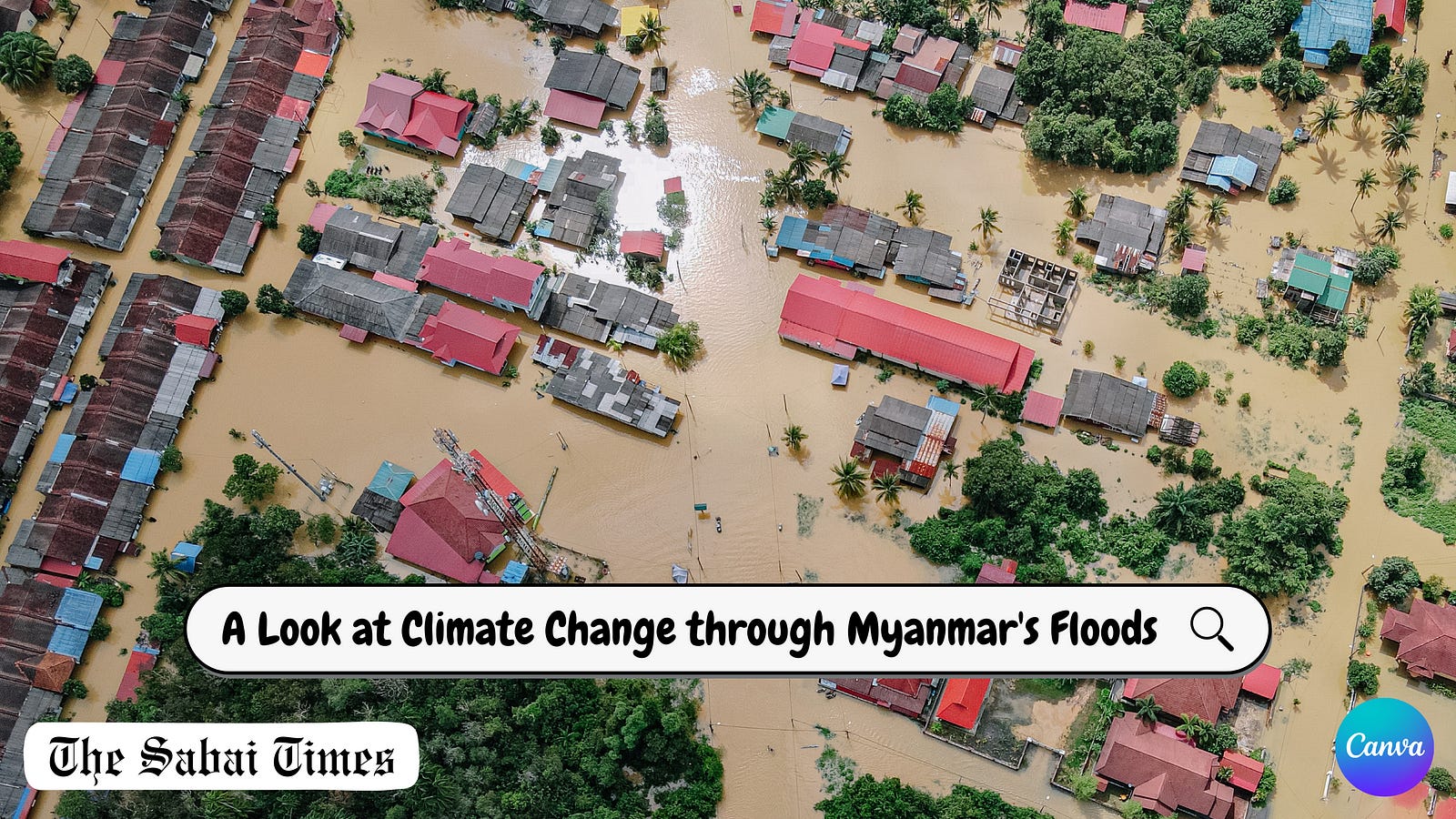
As the world gathers around Sustainable Development Goal (SDG) 13, “Take urgent action to combat climate change and its impacts,” Myanmar is a stark reminder of why this goal cannot be delayed. The shocking floods that swept across Myitkyina in July are not isolated events but a symptom of a more significant, rising climate crisis.
In July, the people of Myitkyina faced one of the most severe floods in recent memory, displacing thousands, destroying homes, and claiming lives. While heavy rainfall during the monsoon season is familiar to Myanmar, the intensity and frequency of these floods have increased in recent years. The increasing unpredictability of weather patterns — driven by climate change — has overwhelmed local infrastructure and disaster preparedness efforts, leaving communities more vulnerable than ever.
Climate change is at the heart of these extreme weather events. Rising global temperatures have led to more intense and frequent storms, heavier rainfall, and sea-level rise, all of which Myanmar has been battling. As glaciers melt and ocean temperatures rise, the effects are most acutely felt in vulnerable countries like Myanmar. These floods are not just disasters — they directly impact a changing climate moving faster than our ability to adapt.
Myanmar’s floods serve as a heartbreaking reminder that SDG 13 is not just a global agenda item but a life-or-death priority for millions. The country’s experience is echoed worldwide, from hurricanes in the Caribbean to wildfires in Australia. These extreme weather events will become more frequent, deadly, and costly without urgent and coordinated global action.
SDG 13 calls for urgent action to limit global warming and reduce the risks associated with climate change. But this goal requires more than words. It demands fundamental changes. Communities like Myitkyina need more robust infrastructure to withstand the impact of extreme weather. Governments and organisations must invest in flood defenses warning systems, and sustainable urban planning.
Climate change is a global problem that knows no borders. Countries must honour their commitments to reduce emissions and support vulnerable nations like Myanmar through financing, technology, and knowledge sharing. Every individual has a role to play. Raising awareness of the link between local disasters and global climate change is crucial for building the momentum to drive policy changes and sustainable practices.
Myanmar’s floods are a warning that we can no longer afford to ignore. SDG 13 is not just about combating climate change in the future — it’s about fighting the effects already here. Urgent action is not optional; it’s a responsibility we owe to the communities already on the frontlines of this crisis. Let’s act now to prevent more disasters like the Myitkyina floods and build a resilient world in the face of climate change.
Together, we can make a difference for the common good!
Naw Seng is a Kachin researcher focusing on community development, human rights, and management. Currently, he is pursuing a degree in Management Studies.
“Advocating Sustainability, Shaping Our Future”
The opinions expressed in these articles do not represent the official stance of SRIc - Shwetaungthagathu Reform Initiative Centre. The Sabai Times is committed to publishing a range of perspectives that may not align with editorial policy.
Help Sustain The Sabai Times - Myanmar’s Voice for Sustainable Development Support The Sabai Times